What are you looking for?
What's New in 89600 VSA 2025 and 2026
Keysight Vector Signal Analysis (89600 VSA) software
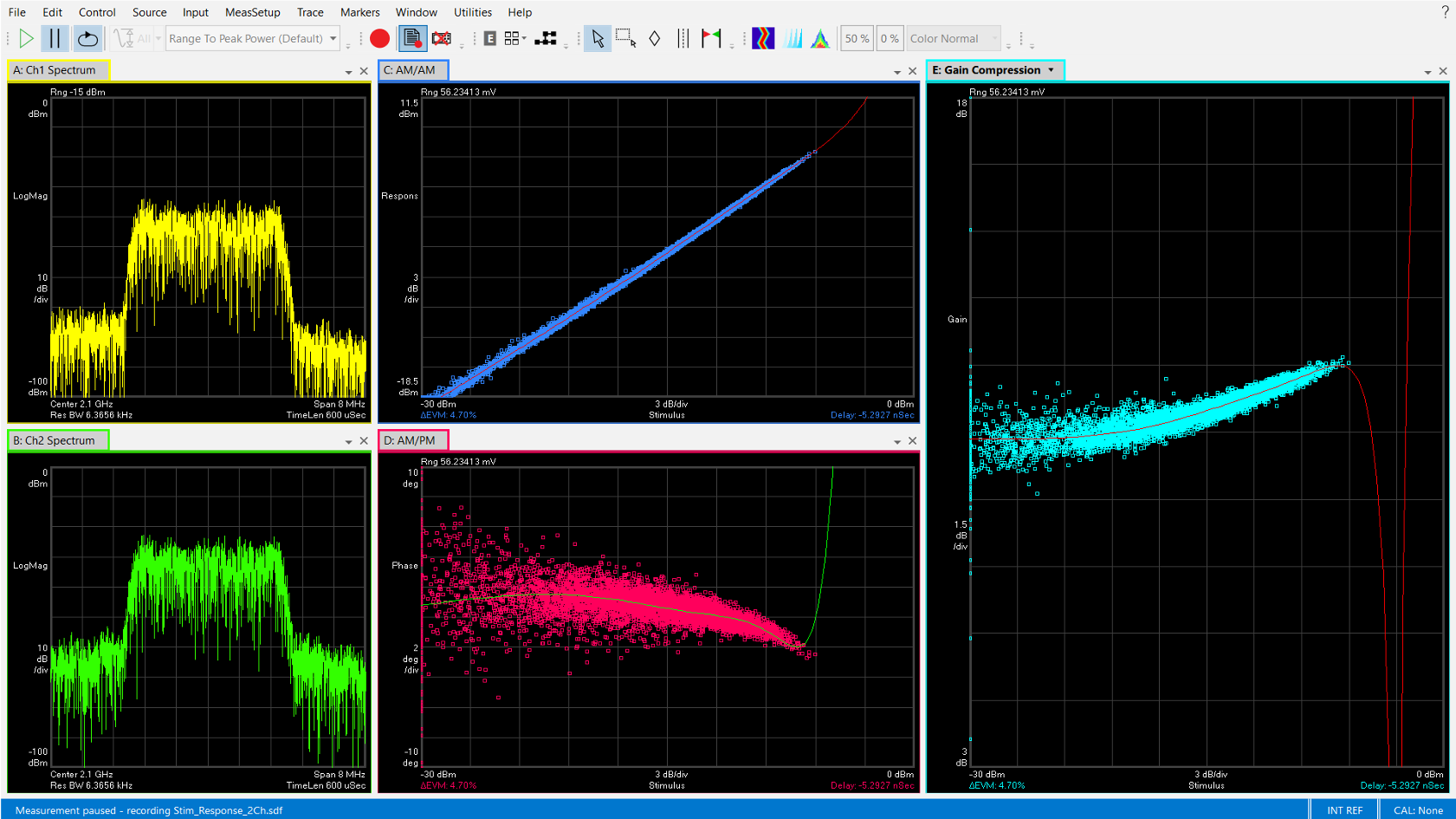
Keysight 89600 VSA 2025, 2025 U1 & 2025 U2, and 2026
89600 VSA2025 (Build 29.00), VSA2025 U1 (Build 29.20), and VSA2025 U2 (Build 29.40) and VSA2026 (30.00) are the latest several releases of Keysight’s PathWave Vector Signal Analysis software shipped in 2025 and 2026, a comprehensive set of tools for demodulation and vector signal analysis. Use 89600 VSA software tools to explore every facet of a signal and optimize your designs. Measure a broad range of signals including 6G Research, 5G NR/5G-Advanced, WLAN, IoT/UWB, Satellite Communication, Advanced Radar, Custom Modulation, Custom OFDM and more. Gain greater insight in frequency, time, modulation domains and optional decoding. Compatible with signal analyzers, oscilloscopes, network analyzers, logic analyzers, FieldFox handheld, signal source and many more test instruments. The latest 89600 VSA is released and available for download at K.com. Some key features have the demo videos on RF Test Application playlist
Highlights
Keysight 89600 VSA 2025 and 2026 includes new and enhanced features and capabilities including:
- Hardware Connectivity - Analyzers Updates (VSA2025, VSA2025 U2, VSA2026)
- Hardware Connectivity - Source Updates (VSA2025, VSA2026)
- Tiered Option for Base Platform and Hardware Connectivity (VSA2025 U1, VSA2025U2, VSA2026)
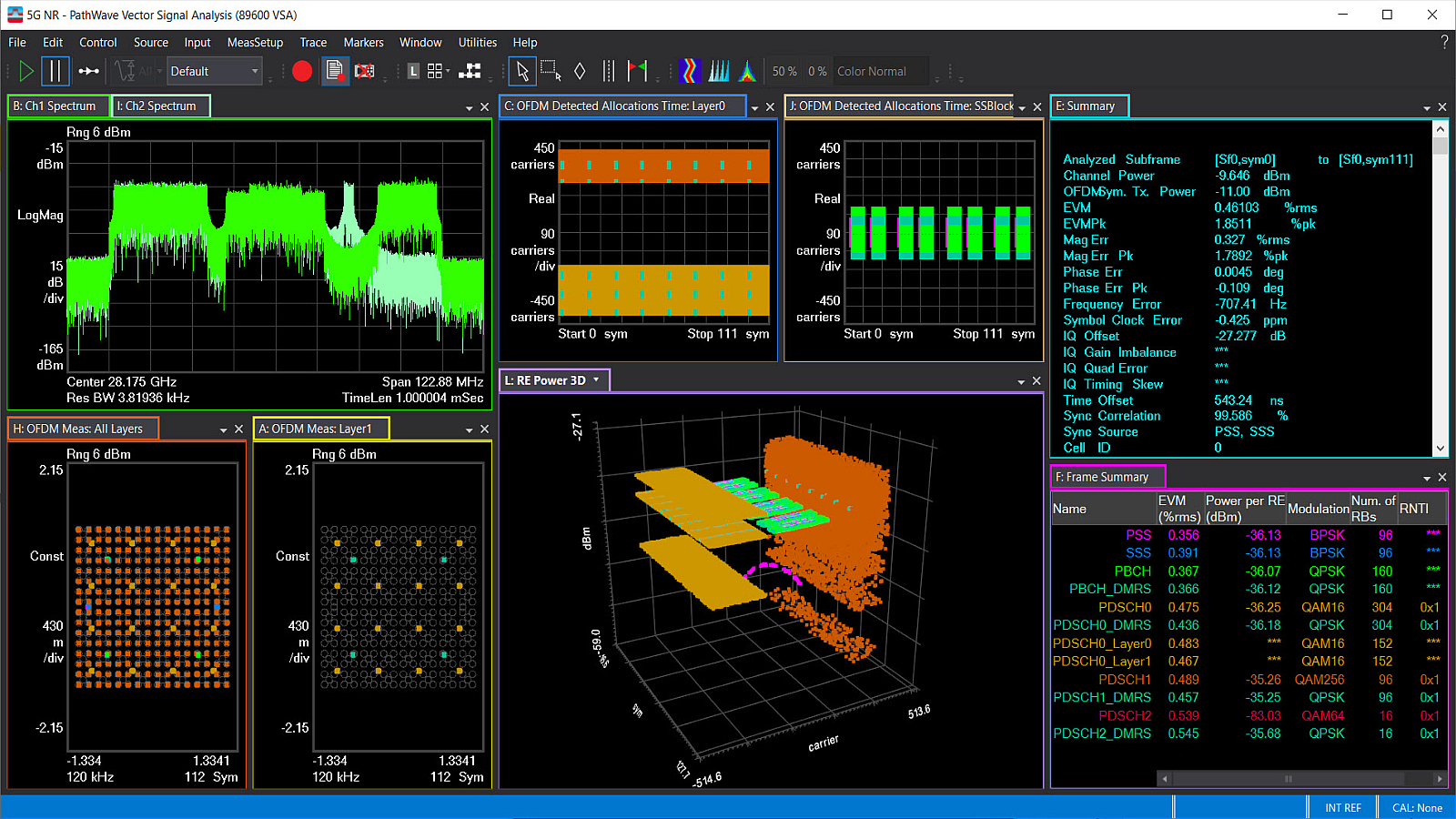
- 5G NR/ 5G-Advanced Updates (VSA2025, 2025U2, VSA2026)
- ORAN Uplink Performance Improvement Application (VSA2025)
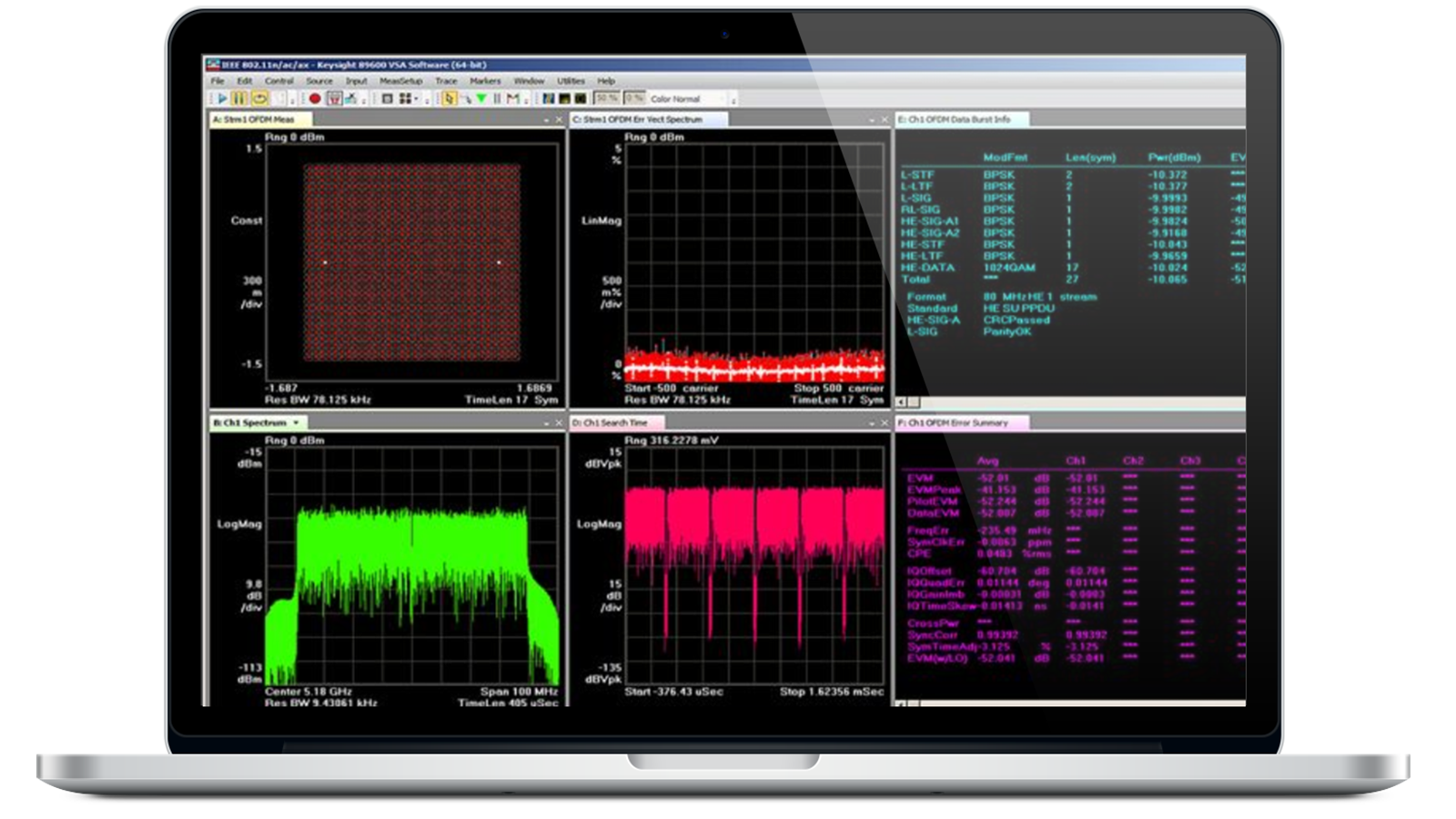
- WLAN 802.11ax/be with 4096QAM and new 802.11bn (VSA2025, VSA2025U2, VSA2026)
- Satellite CommunicationUpdates for DVB-S2/S2X (VSA2025, VSA2025U2)
- Improved EVM Performance with ccEVM and IQ-NC Technologies (VSA2025, VSA2025U2, VSA2026)
- New File Formats and Streaming Support for VITA49 (VSA2025U2)
- Custom OFDM Modulation Analysis Updates (VSA2025, VSA2026)
- Digital Demodulation Analysis Flex Frame GUI Simplification and Flex Frame Waveform Generation (VSA2026)
Learn more
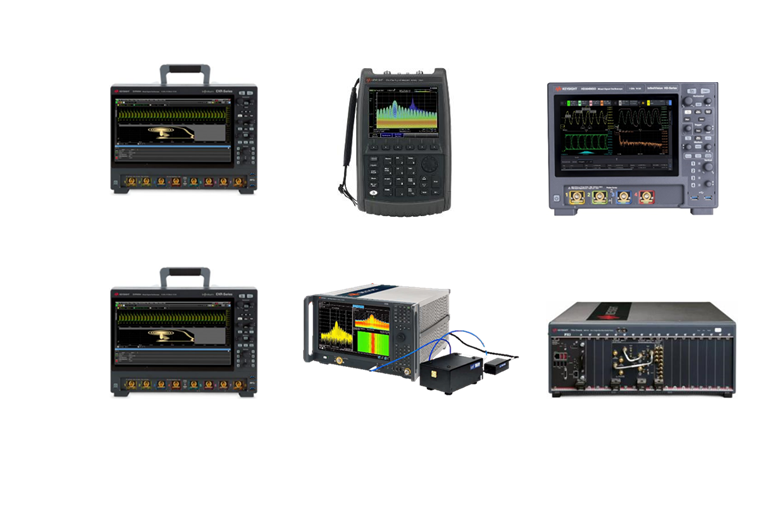
New Signal Analyzer Hardware Supported
Hardware Connectivity - Analyzers Enhancements
89600 VSA adds more analyzers support with the VSA2025, VSA2025 U2 releases and highlighted below. For more complete information, please refer to the link 89600 VSA compatible hardware.
· InfiniiVision HD3 Series Oscilloscopes (VSA2025)
· Support for FullRateDdc as a value for SampleMode input extension property of InfiniiVision HD3 Series scopes. This selection affects only Baseband measurements. It enables decreasing the effective sample rate and increasing the number of bits of vertical resolution up to 16 bits (VSA2025 U2)
· Multi-channel configurations of M941xE PXI VXT (BETA) (VSA2025)
· S9110E Multi-Band Vector Transceiver (BETA) (VSA2025)
· N9042B UXA with Option 575, which extends the maximum center frequency to 75 GHz (VSA2025)
· Support for V3060A tuner + MXR combination configuration (VSA2026)
· Support M5200A multi-module configurations with or without M9032A sync module (VSA2026)
· Added an input extension to the VNA hardware extension as UserScpiCommands. User SCPI commands can be used to set instrument parameters that are not part of standard VSA instrument control (VSA2025 U2)
· Support the HardwareConfiguration.Suspend() method to the VNA hardware extension. While the VNA connection is suspended, a macro or another application is able to send SCPI commands to the instrument to set parameters that are not part of standard VSA instrument control (VSA2025 U2)
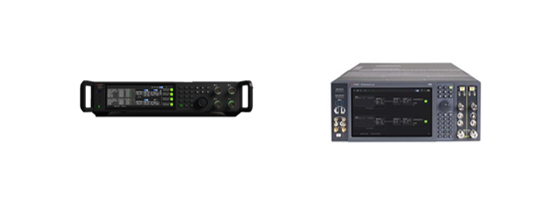
New Signal Source Hardware Supported
Hardware Connectivity - Source Control Enhancements
89600 VSA adds more source control support with the VSA2025 releases and highlighted below. For more complete information, please refer to the link 89600 VSA compatible hardware.
· Added support for multiple virtual signals per output channel with M9484C (VXG-C) vector signal generator (VSA2025)
· Added support for M8198A, M8199A/B AWG (controlled via M8070B software)
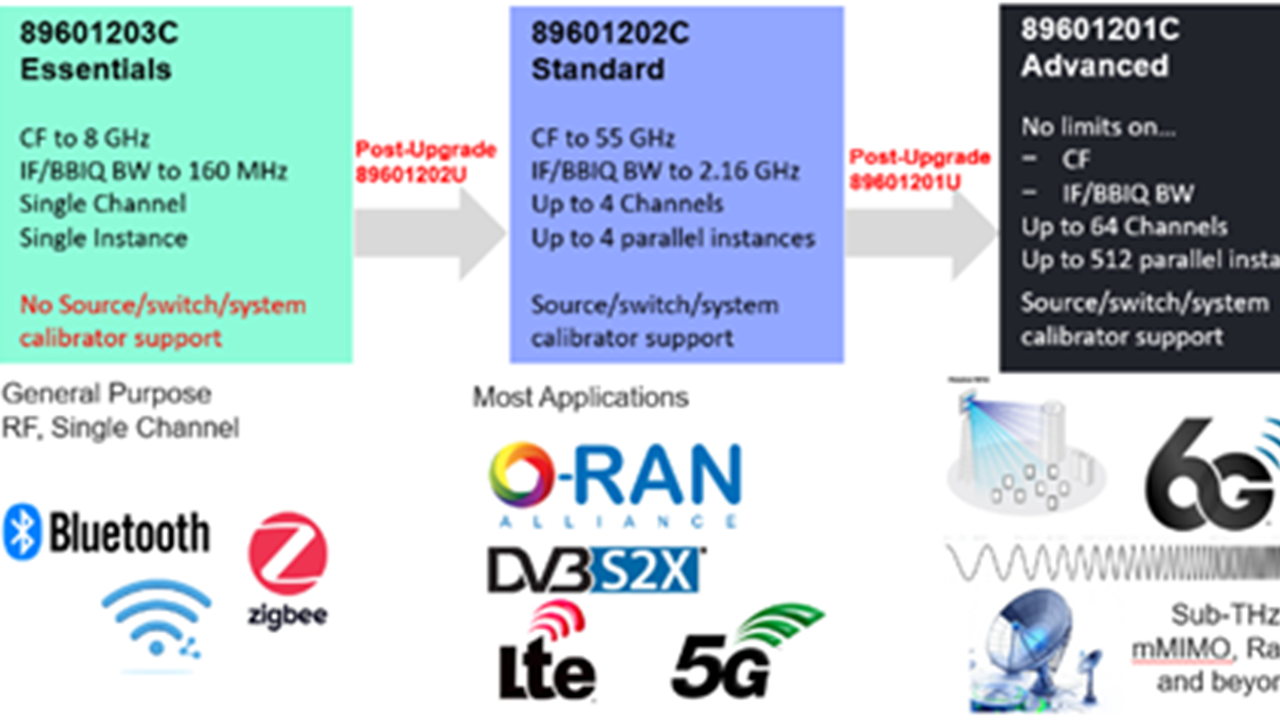
89600 VSA Tiered Option with Essential, Standard and Advanced capabilities
89600 Tiered Options for Base Platform and Hardware Connectivity
Starting with VSA 2025 U1 release, the 89600 VSA software introduces three tiered options designed to balance cost and capability for a wide range of measurement needs. These tier options provide scalable solutions for your specific requirements at least one of them is required to run 89600 VSA base platform.
For existing users, the legacy 89601200C license seamlessly transitions into the Advanced tier (89601201C), providing the same robust capabilities and measurement flexibility. It is fully compatible with VSA software version 2019 U1 or above, including those released prior to and following the VSA 2025 U1 update. This ensures continuity for existing users while offering access to the latest features.
The newly introduced tiered options (89601201C, 89601202C, and 89601203C) require VSA 2025 U1 or later. 89601201U and 89601202U post upgrade requires VSA2025 U2 or later.
Essentials Tier (89601203C):
- Optimized for mobile device testing, legacy WLAN, 5G NR FR1 compliance testing, and general RF design
- Covers frequencies up to 8 GHz with 160 MHz analysis bandwidth
- Supports single-carrier measurements, including I+Q using two physical inputs
- Ideal for individual test stations or dedicated application focus
- Supports up to 4 simultaneous measurements for efficient test sequencing
- Support up to 4 parallel VSA instances
- Includes source control and system calibration capabilities
- Enables phase-coherent measurements across channels, depending on hardware
- 89601203C essential tier can post upgrade to standard tier together with 89601202U, which will extend the capabilities from Essential to Standard.
- capabilities from Standard tier to Advanced tier.
Standard Tier (89601202C or 89601203C with 89601202U):
- Tailored for satellite communications, UWB, 5G NR FR2, WLAN, radar systems, and multi-channel applications
- Extends frequency range to 55 GHz with 2.16 GHz analysis bandwidth
- Supports up to 4 simultaneous measurements for efficient test sequencing
- Support up to 4 parallel VSA instances
- Includes source control and system calibration capabilities
- Enables phase-coherent measurements across channels, depending on hardware
- 89601203C essential tier can post upgrade to standard tier together with 89601202U, which will extend the capabilities from Essential to Standard.
Advanced Tier (89601201C or 89601202C with 89601201U):
- Designed for research labs, aerospace and advanced technology development
- No frequency or bandwidth limitations for cutting-edge applications
- Up to 64 measurement channels for complex MIMO and beamforming analysis
- Support up to 512 parallel VSA instances
- Full flexibility for large, shared lab environments
- 89601202C standard tier can post upgrade to advanced tier with 89601201U, which will extend the capabilities from Standard tier to Advanced tier.
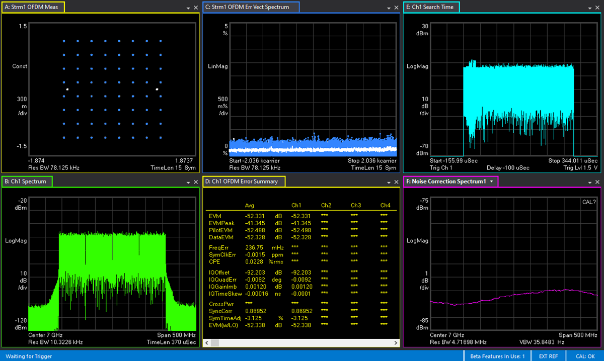
WLAN EVM Improvement with IQ-NC
89601BHXC WLAN Modulation Analysis
· Remove the restriction on 4096QAM modulation analysis. Now high-order QAM over 1024 is no longer export-controlled (VSA2025)
· Both 89601BHXC and 89601TRVC-TRL (trial license) can enable 4096QAM for 802.11ax/be (VSA2025)
· Added support for Spectral Flatness measurement, including pass/fail results as specified by the standard (VSA2025)
· Enhanced EVM analysis using IQ Noise Correction (IQ-NC) (requires 89601EVMC) (VSA2025)
· IQ-NC with reorganized UI and performance improvement (VSA2025 U2)
· Added individual MPDU CRC pass/fail status for 802.11n/ac/ax/be formats (VSA2025 U2)
· Support for 802.11bn/Wi-Fi8 with all PPDU formats, expanded MCS, longer LDPC, Unequal QAM (UEQM), Enhanced Long Range PPDU (ELR-PPDU), and Distributed RU (DRU) (VSA2026)
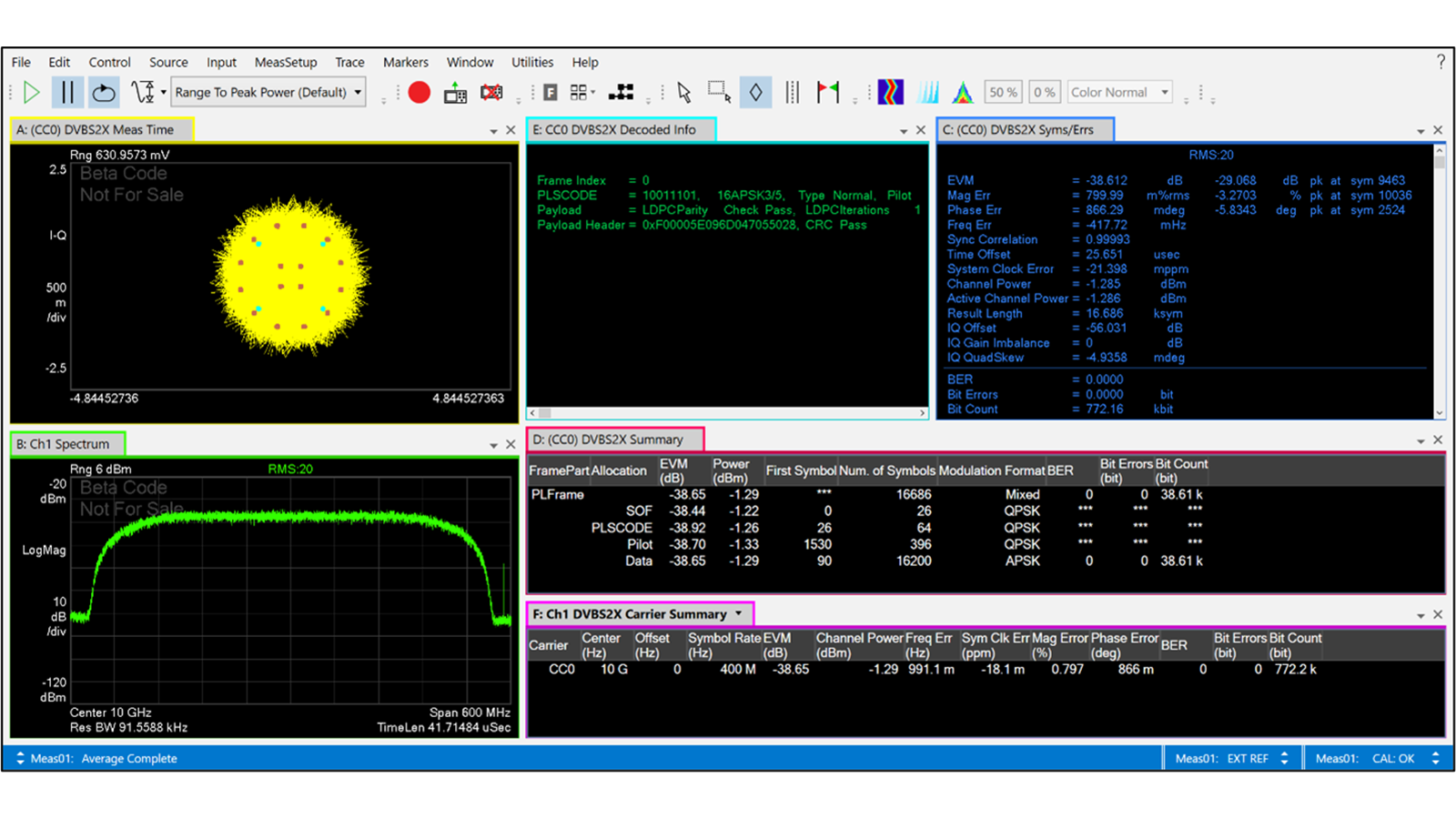
DVB-S2X Measurement with Modulation Analysis and Decoding
89601DVBC Satellite Communication Measurements for DVB-S2/S2X
· Automatic detection of PLS (PHY Layer Signaling) Code. It detects frame type, modulation and coding rate (MODCOD), and the presence or absence of pilot (VSA2025)
· Support for Dynamic and Static auto-detection modes for both low and high SNR use cases (VSA2025)
· Support for dynamic scheduling, allowing different MODCODs within the multi-frame measurement interval (VSA2025)
· New measurement results added to the Syms/Errs trace for the auto-detected frame type like ModCod, and Pilot (VSA2025)
· Added two phase tracking modes with Interpolate with Pilot featuring two interpolation approaches (1. Average and Nearest; 2. Linear Interpolation) and Moving Average Over All Symbols (VSA2025)
· Added support for DVB-S2X Annex E Super-Frame Formats 5, 6, and 7 with auto-detection (VSA2025 U2)
· Add SCPI support (VSA2025 U2)
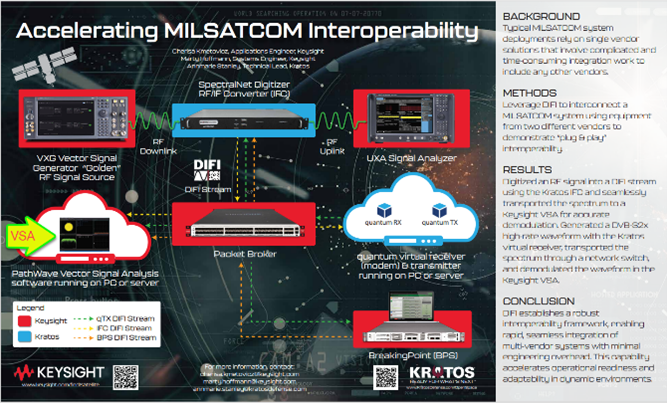
New File Format and Live Streaming Support
89601101C New File Format and Live Streaming Support
89600 VSA can support a wide range of file formats including *.binf, *.bin, *.csv, *.mat, and *.txt. Vita49 file and streaming support are added in the recent releases.
· DIFI certified as the only T&M software (VSA2025)
· Added automatic update of center frequency and span in VSA when the RF reference frequency or bandwidth fields change in the context packet (VSA2025 U2)
· Adds support for more Context Indicator Field (CIF 0) bits and State and Event Indicator bits (VSA2025 U2)
· Support for recalling .pcapng and .pcap files as a recording file if they contain VITA-49 packets (VSA2026)
· Support timestamp for VITA-49 packets from recording or live streaming (VSA2026)
· Added support for binding to a specific stream identifier when using VITA-49 streaming to VSA (VSA2026)
· Added support for receiving VITA-49 UDP multicasts (VSA2026)
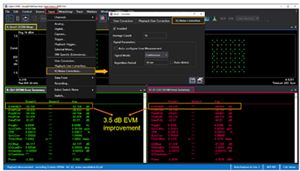
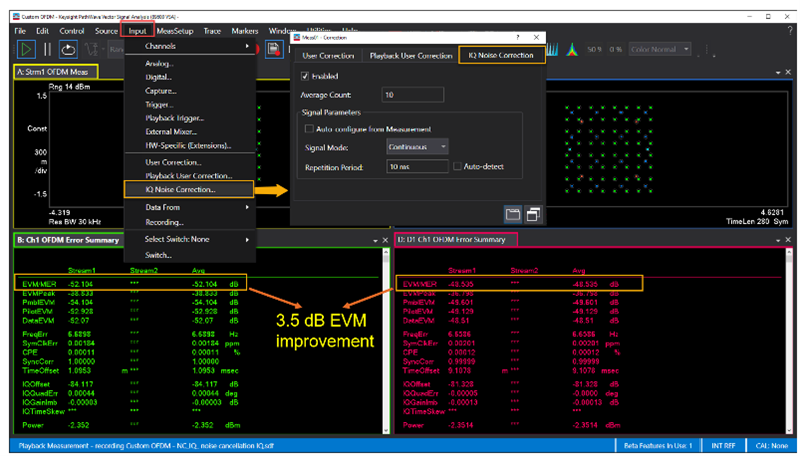
IQ-NC improvement of 3.5 dB with Custom OFDM as example
86901EVMC EVM Improvement with ccEVM and IQ-NC Technologies
· Support for IQ Noise Correction (IQ-NC) to correct overall EVM for the (uncorrelated) noise level of the instrument (BETA) (VSA 2025)
· IQ-NC supports Custom OFDM, 5G NR and WLAN measurements (VSA2025)
· IQ-NC has beta support for most X-Series Signal Analyzers and VXT analyzers (VSA2025)
· Added Time Tracking parameter to allow disabling fine time alignment so that you can specify the exact repetition period in number of samples (or fractional samples) (VSA2025 U2)
· Added Repetition Info trace with information about phase, time, and amplitude of each repetition (VSA025 U2)
· Added raw noise spectrum traces for troubleshooting noise profile spectrum (VSA2025 U2)
· Added the ability to which types of noise to remove: None (pass-through for troubleshooting), Analyzer (regular IQ-NC), or Analyzer+DUT (coherent averaging→distortion EVM) (VSA2025 U2)
· Improved noise profile accuracy for instruments with mechanical attenuators (working with X-Series instruments) (VSA2025 U2)
· Added SCPI support (VSA2025 U2)
· Support analyzer noise provided by manual noise profile from measuring, or imported noise profiles via .mat file (VSA2026)
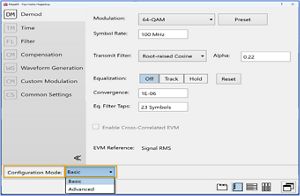
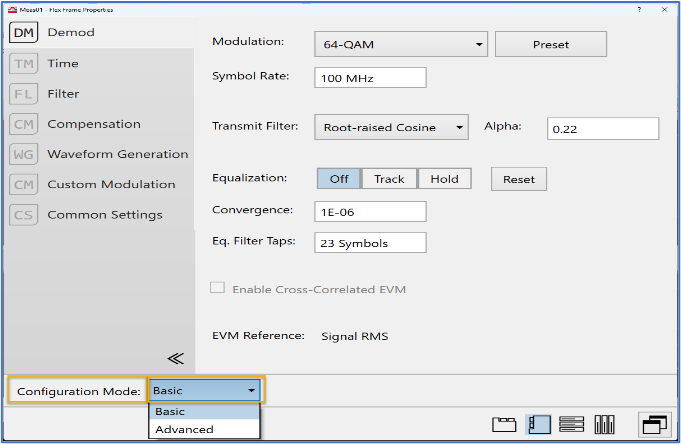
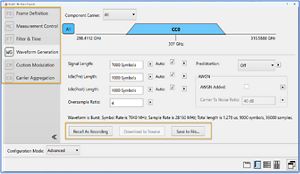
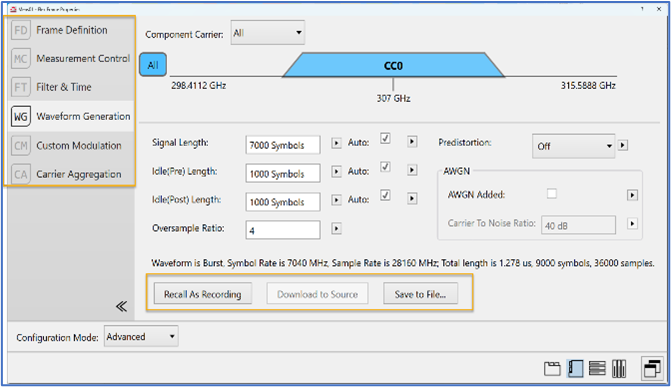
Simply the Flex Frame with Basic Mode support and complexed configuration defined as Advanced mode
Flex Frame Waveform Generation
89601AYAC Digital Demod Analysis
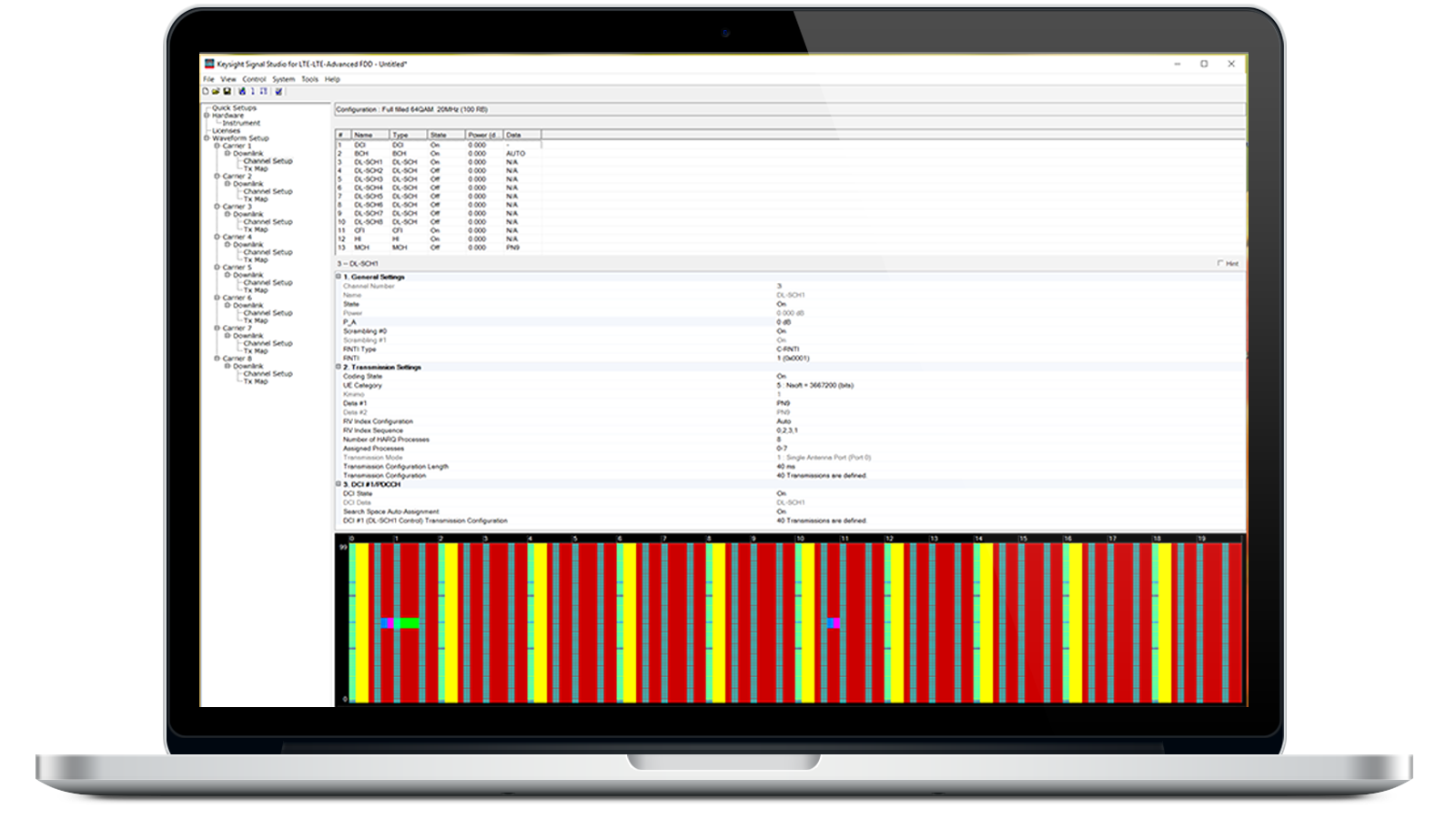
Digital Demodulation analysis supports three measurements including Digital Demod, Custom IQ, and Flex Frame.
- Flex Frame adds the basic mode for simplified configuration (VSA2026)
- Flex Frame traditional Flex Frame is defined as advanced mode.
- Flex Frame adds the “After EQ” parameter for frequency estimation mode (VSA2026)
- Enhanced the frequency estimation for OOK signals (VSA2026)
89602AYAC Flex Frame Waveform Generation
This new feature allows the 89600 VSA Flex Frame users to generate a waveform based on current Flex Frame configuration, which requires both 89601AYAC and 89602AYAC licenses and run with VS2026 or above releases.
- Configure the Flex Frame configuration for signal generation and analysis together as a solution (VSA2026)
- Added functionality to equalize a waveform , apply predistortion, and/or add AWGN (VSA2026)
- Generated waveform can be recalled as a recording, downloaded to a signal generator, or saved to files (VSA2026)
- Added EQ correction spectrum trace, which can be used for fixed equalization or predistortion to improve spectrum flatness (VSA2026)
Custom OFDM Modulation
89601BHFC Custom OFDM Modulation Analysis
Keep up to date with the latest Custom OFDM measurement extension enhancements with VSA2025 release.
- Added support for Cyclic Suffix (CS) (VSA2025)
- Added MIMO Info Table trace supporting both Time Domain Pilot and Frequency Domain Pilot, including antenna detection threshold setting (VSA2025)
- Added a new RE Power Heatmap trace (VSA2025)
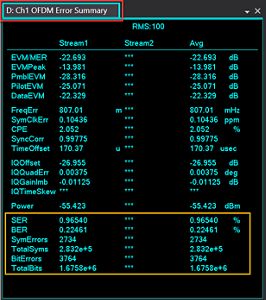
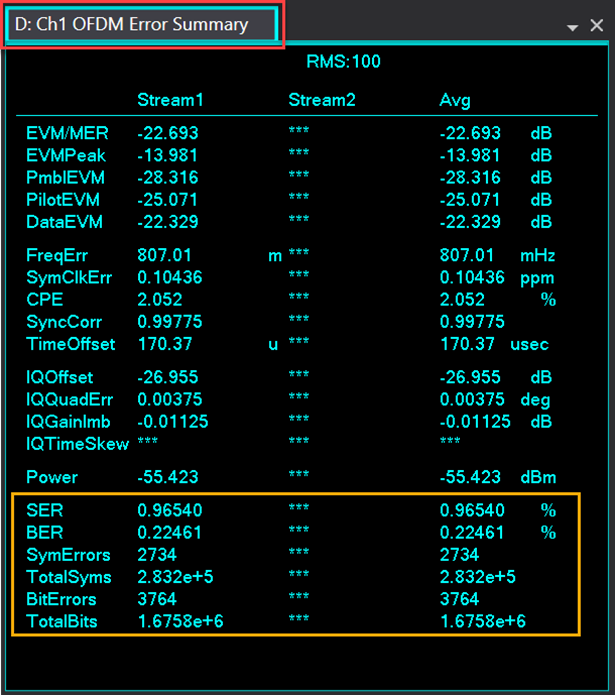
- Added support for Time Offset result in the OFDM Error Summary table, reporting the time (in seconds) from the beginning of the capture to the start of the analyzed OFDM frame (VSA2025)
- Support for H matrix estimation using preamble instead of pilot (VSA2025)
- Enhanced EVM analysis using IQ Noise Correction (IQ-NC) (requires 89601EVMC) (VSA2025)
- Per-user allocation and per-stream (layer) result reporting have been added within the Burst Info trace (VSA2025)
- Frame Definition tab GUI usability improvements (VSA2025)
- Add 5G Presets to simplify 6G Research as a validated reference (VSA2026)
-
Support phase compensation algorithm aligned with 5G NR (VSA2026)
- Provide full flexibility with TDD test model allocation configuration (VSA2026)
Learn More
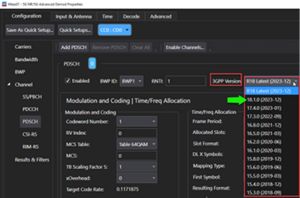
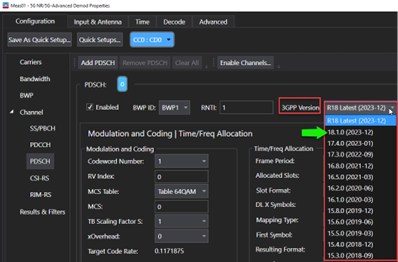
89600 VSA Support 3GPP Release 18 Support with 5G-Advanced
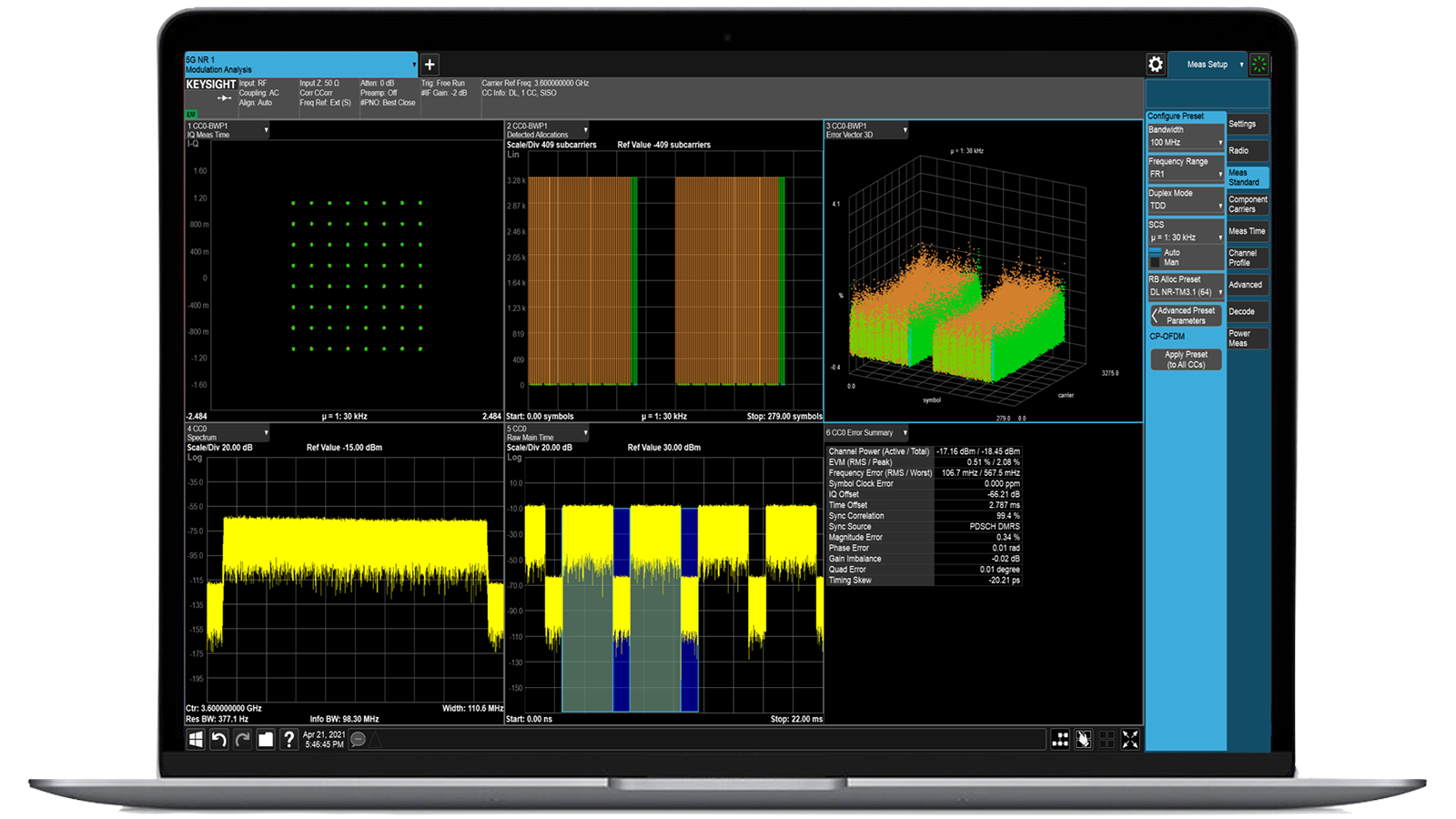
89601BHNC Latest 5G NR/5G-Advanced Capabilities
5G-Advanced (Rel-18) MIMO Enhancements
· Up to 8 Layers/8x8 MIMO in the UL (was limited to 4 Layers/4x4 in 5G NR) (VSA2025)
· Enhanced DMRS with maximum number of DMRS ports for PDSCH/PUSCH to 16 for DMRS Type 1 and 24 for DMRS Type 2 (was limited to 8 and 12 in 5G NR) (VSA2025)
Uplink and Downlink
· Speed improvements for SISO and MIMO measurements (VSA2025)
· Improved BLER performance for low SNR signals for O-RAN receiver tests (VSA2025)
· Added support for Block Error Rate (BLER) and Throughput (TPUT) results in the Summary table (VSA2025)
· Added a new RE Power Heatmap trace (VSA2025)
· Added layer-to-channel mapping, allowing each layer or DMRS port to be mapped to different measurement channels (VSA2025)
· Supports applying a user-supplied H matrix to PDSCH/PUSCH per layer data (VSA2025)
· Provided accurate Time Offset measurement result for recorded signals using the newly implemented periodic playback trigger (VSA2025)
· Enhanced EVM analysis using IQ Noise Correction (IQ-NC) Added different EQ and Tracking strategies across multiple (requires 89601EVMC) (VSA2025)
· Added different EQ and Tracking strategies across multiple PxSCHs (VSA2025 U2)
· Added Sidelobe peaks for 5G Beam Pattern Summary trace (VSA2025 U2)
· Added support for measuring absolute peak power in dBm for Beam Peaks trace (VSA2025 U2)
· Added support for Satellite Access Node (SAN) test models as defined in the 3GPP TS 38.181 specification (VSA2025 U2)
Uplink
· Supports uplink performance improvement (ULPI) for O-RAN to enhance uplink massive MIMO (89601ULPC requires 89601BHNC) (VSA2025)
· Enables demodulation of PUSCH without DMRS, which is a ULPI use case for DMRS-beamforming with equalization (DMRS-BF-EQ) (89601ULPC requires 89601BHNC) (VSA2025)
· Support PRACH Configuration Index 256 to 262 for FR1 unpaired spectrum (VSA2025 U2)
- Added support for 3GPP Conformance Test for UL MIMO based on 3GPP 38.521 Release 17 (2023-09) (VSA2025 U2)
Downlink
- (Rel-18) FR1 3MHz SSB, CORESET0 and PDSCH measurement
- Support for PDCCH MIMO Info table, which can show the TAE/Power/Phase per PDCCH DMRS port per Channel (BETA) (VSA2025)
- Added support for Positioning Reference Signal (PRS) (VSA2025 U2)
- Add simultaneous PDSCH EVM measurement for All Input Channels/Antenna Ports (VSA2026)
- Added support for PDSCH rate matching around individual PDCCH in the CORESET (VSA2026)
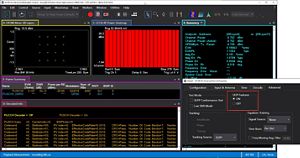
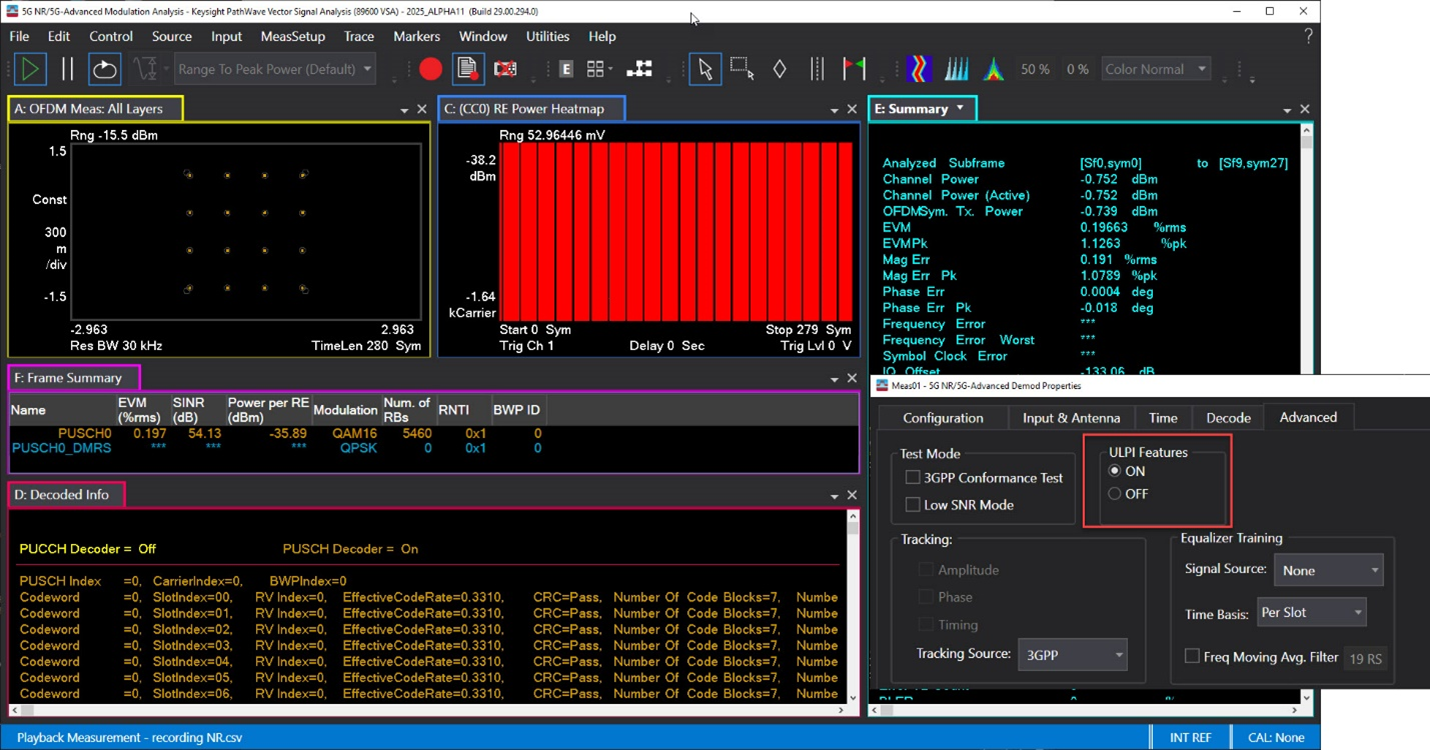
O-RAN Uplink Performance Improvement Application
89601ULPC O-RAN Uplink Performance Improvement Application
In O-RAN systems, the 7-2x functional split is well-suited for configurations with a low number of transmit and receive antennas. However, in uplink massive MIMO (mMIMO) scenarios, it can result in performance degradation and increased fronthaul bandwidth due to the transmission of more streams than layers from the O-RU to the O-DU. O-RAN uplink performance improvement (ULPI) addresses these challenges by enhancing the capabilities of the O-RU.
· Add a new model as 89601ULPC in VSA2025 release Supports uplink performance improvement (ULPI) for O-RAN to enhance uplink massive MIMO (Requires 89601BHNC for 5G NR/5G-Advanced) (VSA2025)
· Enables demodulation of PUSCH without DMRS, which is a ULPI use case for DMRS-beamforming with equalization (DMRS-BF-EQ) (VSA2025)
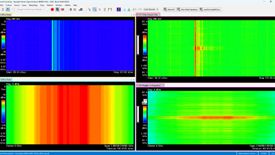
Delay-Doppler analysis for Joint Communication and Sensing (JCAS) applications
89601CSDC Channel Sounding Measurement
JCAS system uses the same RF signal for both data transmission and environmental sensing. To enable this, the receiver must under how the channel affects and changes over time.
· Channel sounding now supports delay-doppler maps from channel impulse response (CIR) with four new measurement trace added (VSA2026)
o CIR vs Time – channel impulse over time
o Delay-Doppler map – Doppler (velocity) vs Delay (range)
o CFR vs Time – channel frequency response vs time
o Doppler vs Frequency – Doppler spectrum across subcarrier
Learn More