6G Channel Modeling: From Digital Twins to Realistic Validation
视频
How can engineers evaluate 6G communication and sensing performance under realistic, repeatable radio conditions? This video explores how the combination of standardized stochastic channel models, site-specific RF digital twins, and hardware-based real-time channel emulation work together to support 6G design and validation.
Keysight’s Usman Virk, the R&D manager and solution architect for RF Digital Twin Solutions, joins product manager Nelson Mayedo to explain what a channel model is, when to use site-specific channel models instead of traditional statistical models, and when the combination of both methodologies is the correct approach. Learn how ray tracing incorporates environmental geometry, materials, antenna configurations, and mobility to evaluate location-specific performance.
The discussion also examines the challenges of integrated sensing and communication (ISAC), where the same radio signals support both information transfer and sensing of surrounding objects simultaneously. Modeling these scenarios requires physically and temporally consistent representations of target reflections, background multipath or clutter, Doppler, radar cross section (RCS) and micro-Doppler for moving objects. Engineers must assess communication performance alongside sensing metrics such as detection probability, false alarm, range accuracy, velocity accuracy, tracking performance, and target classification accuracy.
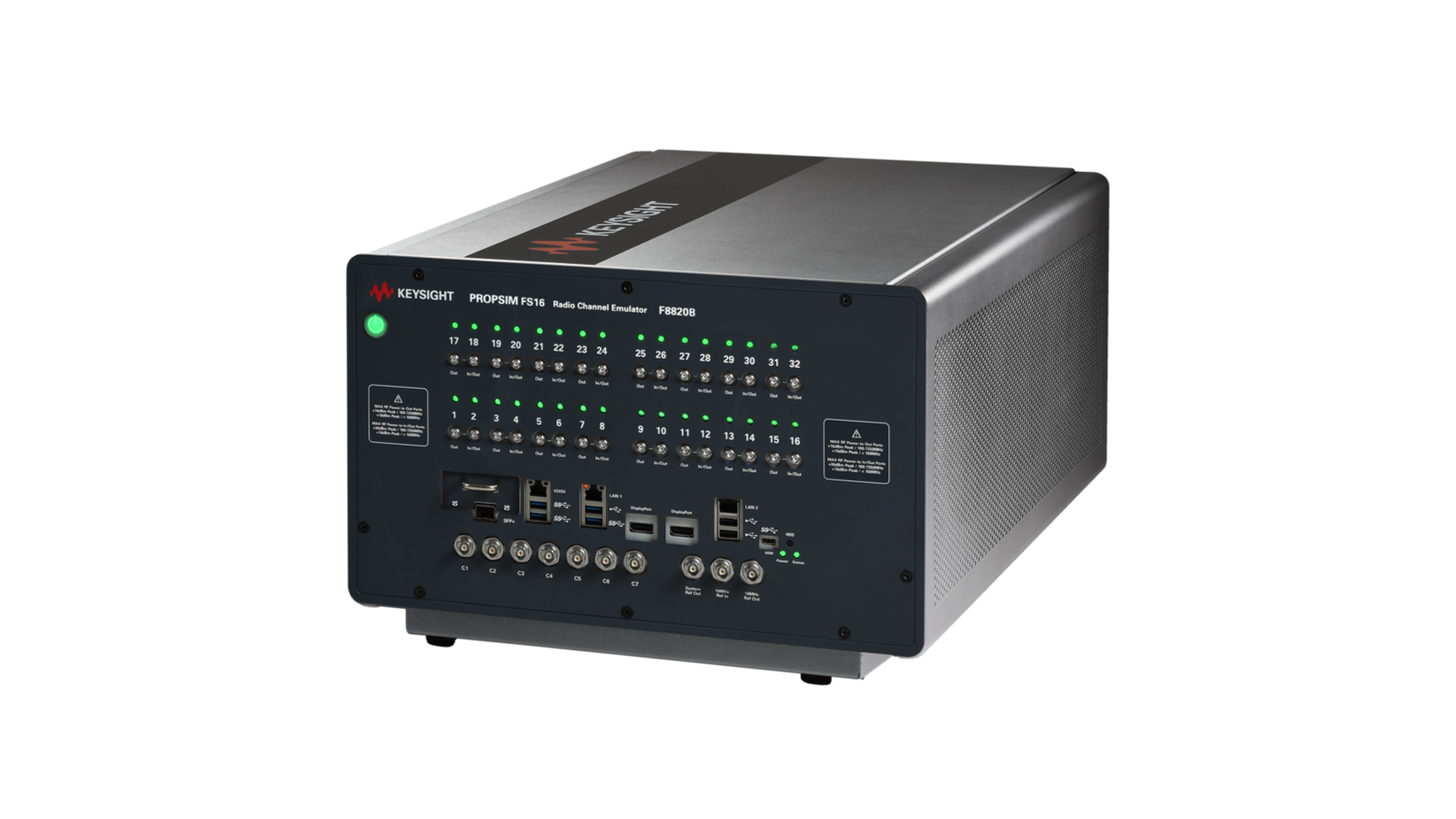
They also talk about software-in-the-loop (SIL) and hardware-in-the-loop (HIL) workflows that connect virtual scenarios to real-device and base station testing in the lab. By carrying consistent channel conditions from simulation into real-time RF channel emulation, engineers can evaluate algorithms earlier, reproduce field failures, and compare implementations under controlled and repeatable lab conditions.
This video explains how a continuous validation workflow can support earlier design decisions and more accurate lab testing. Field data remains essential for validating RF digital twins and confirming system behavior in the lab, while seamless connection between simulation and real-time emulation helps teams investigate devices and base stations performance in the lab under new scenarios before deployment.
您希望搜索哪方面的内容?