


Why Use SerDes Designer Bundle
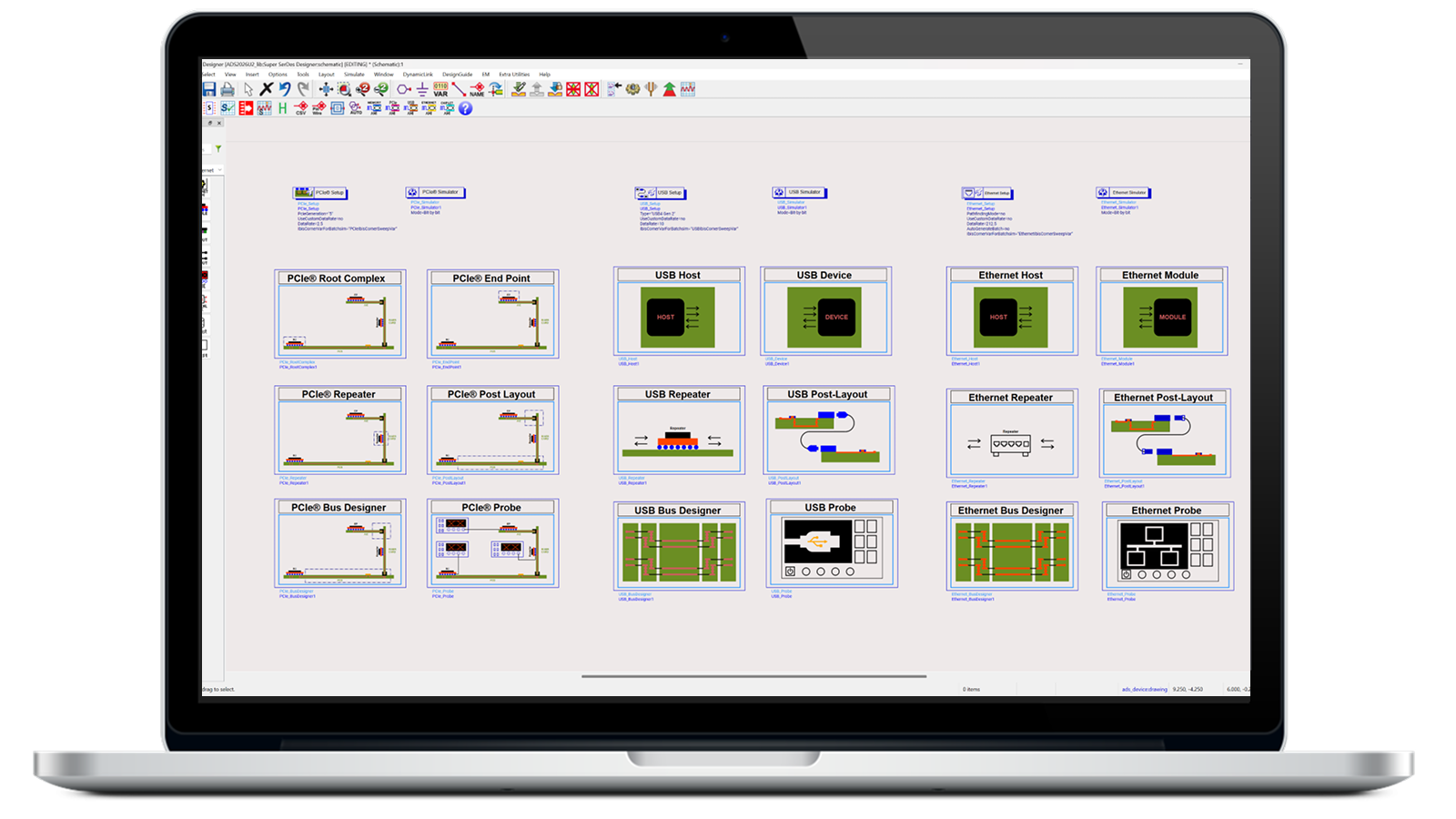
A standards-driven, or standards-aware workflow is a key enabler for accelerating time-to-market, reducing late-stage design risks, and improving overall engineering productivity by increasing design confidence throughout the product development cycle. The SerDes Designer brings together the core strengths of the System Designer series, allowing USB, PCIe ®, and Ethernet Designer to be used within a single product solution. Maximize productivity with a smart design workflow, allowing a lean engineering team to handle multiple SerDes interfaces simultaneously with a single-license solution, offering a highly cost-effective path to high-performance designs and faster product-to-market.
- System Designer for PCIe®Enables designers to perform complete PCIe system analysis and simulation-driven virtual compliance tests with a streamlined workflow.
- System Designer for USBEnables designers to perform complete USB system analysis and simulation-driven virtual compliance tests with a streamlined workflow.
- System Designer for EthernetHelps designers accelerate product development and validation of next-generation Ethernet systems through a smart workflow and AMI model generation capability.
Resources to Get You Started
ADS Software Bundles provide circuit and component designers with a choice of value-packed, preconfigured combinations of software modules built for specific design workflows. These combinations start with the powerful core ADS functionality for 3D physical layout and verification, data display, optimization, Python scripting automation and statistical analysis.


Webinars
Innovations in Keysight EDA High-Speed Digital

Webinars
End-to-End Co-Design for Ethernet: Bridging Photonics and Electronics with EOE Simulation
Bootcamps
Designing with Signal Integrity for Digital Standards

白皮书
Essential Insights for Design PCIe® 6.0 Interconnects

Case Studies
Design Team Increases Efficiency of High-Speed Digital Boards by 100%
SerDes Designer Bundle Includes

System Designer for PCIe®
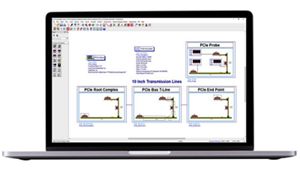
System Designer for PCIe® is a modern and smart PCIe design environment for modeling and simulating the latest PCIe Gen5 and Gen6 systems. It enables designers to perform complete PCIe system analysis and simulation-driven virtual compliance tests with a streamlined workflow.
System Designer for PCIe® is a modern and smart PCIe design environment for modeling and simulating the latest PCIe Gen5 and Gen6 systems. It enables designers to perform complete PCIe system analysis and simulation-driven virtual compliance tests with a streamlined workflow.

System Designer for USB
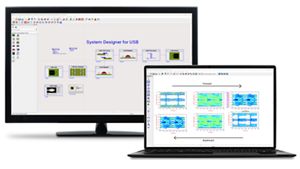
The System Designer for USB is a modern and smart USB design environment for modeling and simulating the latest USB4® Gen2, Gen3 and Gen4 systems. It enables designers to perform complete USB system analysis and simulation-driven virtual compliance tests with a streamlined workflow.
The System Designer for USB is a modern and smart USB design environment for modeling and simulating the latest USB4® Gen2, Gen3 and Gen4 systems. It enables designers to perform complete USB system analysis and simulation-driven virtual compliance tests with a streamlined workflow.
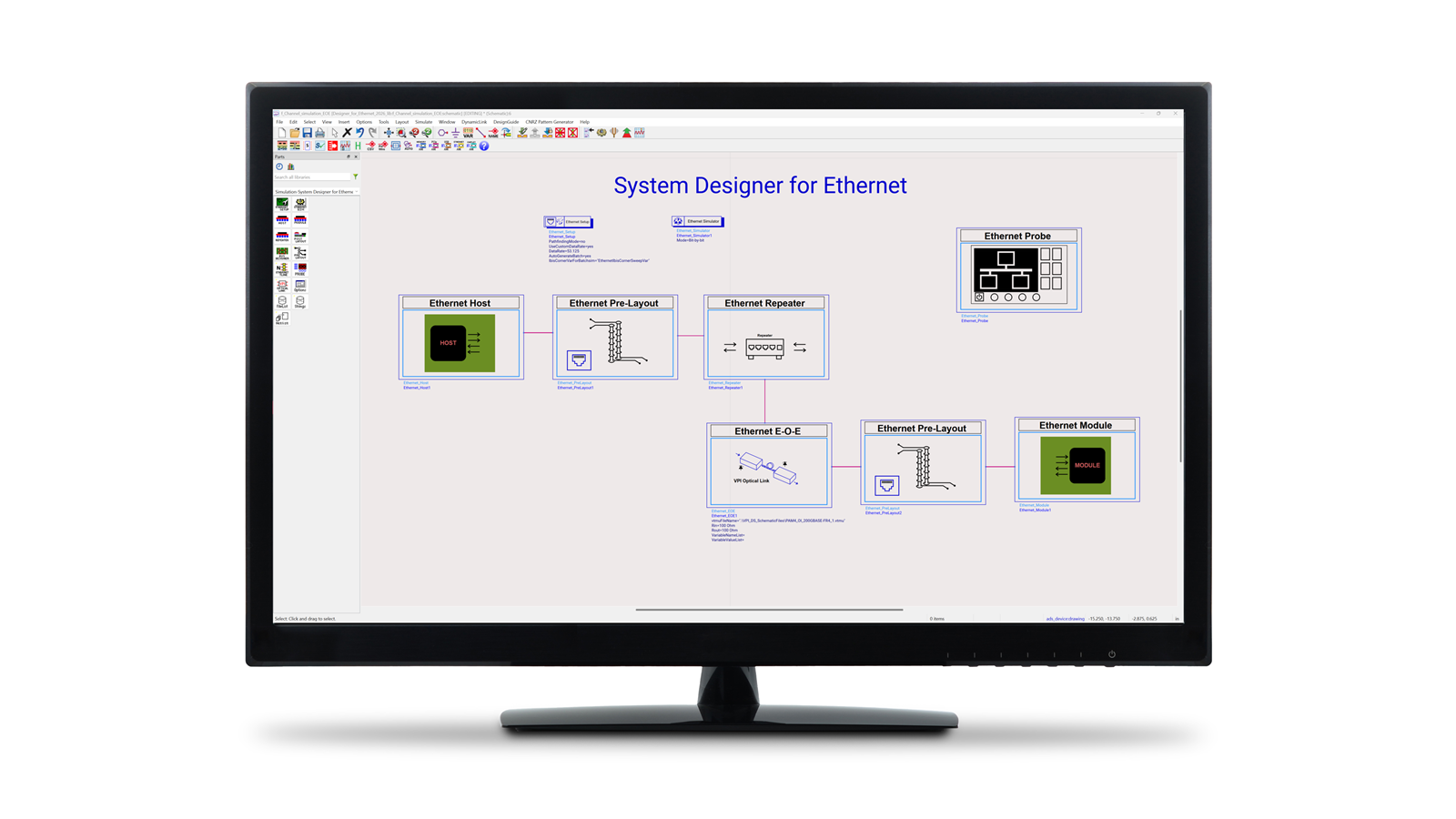
System Designer for Ethernet
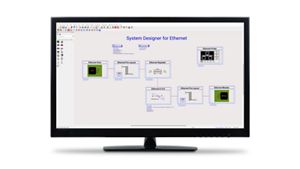
System Designer for Ethernet offers a unified and streamlined design workflow solution for analyzing the latest Ethernet standards, covering speeds from 100G to 1.6Tb/s. It helps designers accelerate product development and validation of next-generation Ethernet systems through a smart workflow and AMI model generation capability.
System Designer for Ethernet offers a unified and streamlined design workflow solution for analyzing the latest Ethernet standards, covering speeds from 100G to 1.6Tb/s. It helps designers accelerate product development and validation of next-generation Ethernet systems through a smart workflow and AMI model generation capability.
Have Questions? We've Got Answers
High-speed digital design is a subset of electronic design that deals with the physical layer of digital circuits and communication systems operating at high data rates. It requires special attention to the effects of signal integrity, power integrity, electromagnetic interference, and thermal management. High-speed digital design can enable faster data transfer, lower power consumption, and higher performance in electronic systems.
Standards-driven design is an electronic design method that follows predefined specifications and protocols for communication, data exchange, and interoperability between different devices and systems. Standards-based design can facilitate compatibility, reliability, and scalability in electronic systems. Examples of standards-based design include USB, PCIe®, UCIe, and DDR.
Keysight EDA’s ADS SerDes design solution offers a comprehensive design and simulation platform that effectively streamlines the SerDes design workflow, empowering designers to overcome challenges, reduce time-to-market, and refine design iterations. It covers various SerDes standards, including PCIe®, USB, Ethernet, MIPI®, and more.
Universal Serial Bus (USB) is a standard for communication and power delivery between devices and hosts, such as computers, smartphones, cameras, and peripherals. USB supports various data rates, from 1.5 Mbps (USB 1.0) to 80 Gbps (USB4 Version 2.0). USB also supports different power delivery modes, from 2.5 W (USB 2.0) to 240 W (USB PD 3.1). USB4 Version 2.0 is the latest version of the standard and is backward compatible with USB 3.2, USB 2.0, and Thunderbolt 3.
Peripheral Component Interconnect Express (PCIe) is a standard for high-speed serial communication between devices and hosts, such as computers, graphics cards, network cards, and storage devices. PCIe supports various data rates, from 2.5 GT/s (PCIe 1.0) to 64 GT/s (PCIe 6.0). The PCI Special Interest Group (PCI-SIG®) defines specifications and compliance tests that guarantee the interoperability of PCIe systems. PCIe also supports different lane configurations, from x1 to x32, to increase bandwidth and performance.