


Why Engineers Choose LucidShape
Speed into the future of automotive lighting design.
Developing modern automotive lighting systems requires engineers to balance optical performance, styling requirements, manufacturability, and regulatory compliance. LucidShape provides simulation, analysis, visualization, and validation tools that help teams design and evaluate lighting systems earlier in development, reducing reliance on physical prototypes and supporting faster design iterations.
 Validate Designs Before PrototypingEvaluate lighting performance early through simulation and virtual testing.
 Accelerate Regulatory ComplianceAssess lighting performance against evolving industry requirements earlier in development.
 Design Better Automotive LightingOptimize optical efficiency, beam patterns, illumination uniformity, and light distribution.
 Reduce Development CyclesExplore more design alternatives while reducing costly physical prototype iterations.
 Improve Cross-Team CollaborationSupport optical, mechanical, styling, and validation teams through a common workflow.
 Evaluate Real-World Driving PerformanceUse virtual driving simulations to understand how lighting systems perform in realistic conditions.
Solutions for Automotive Lighting

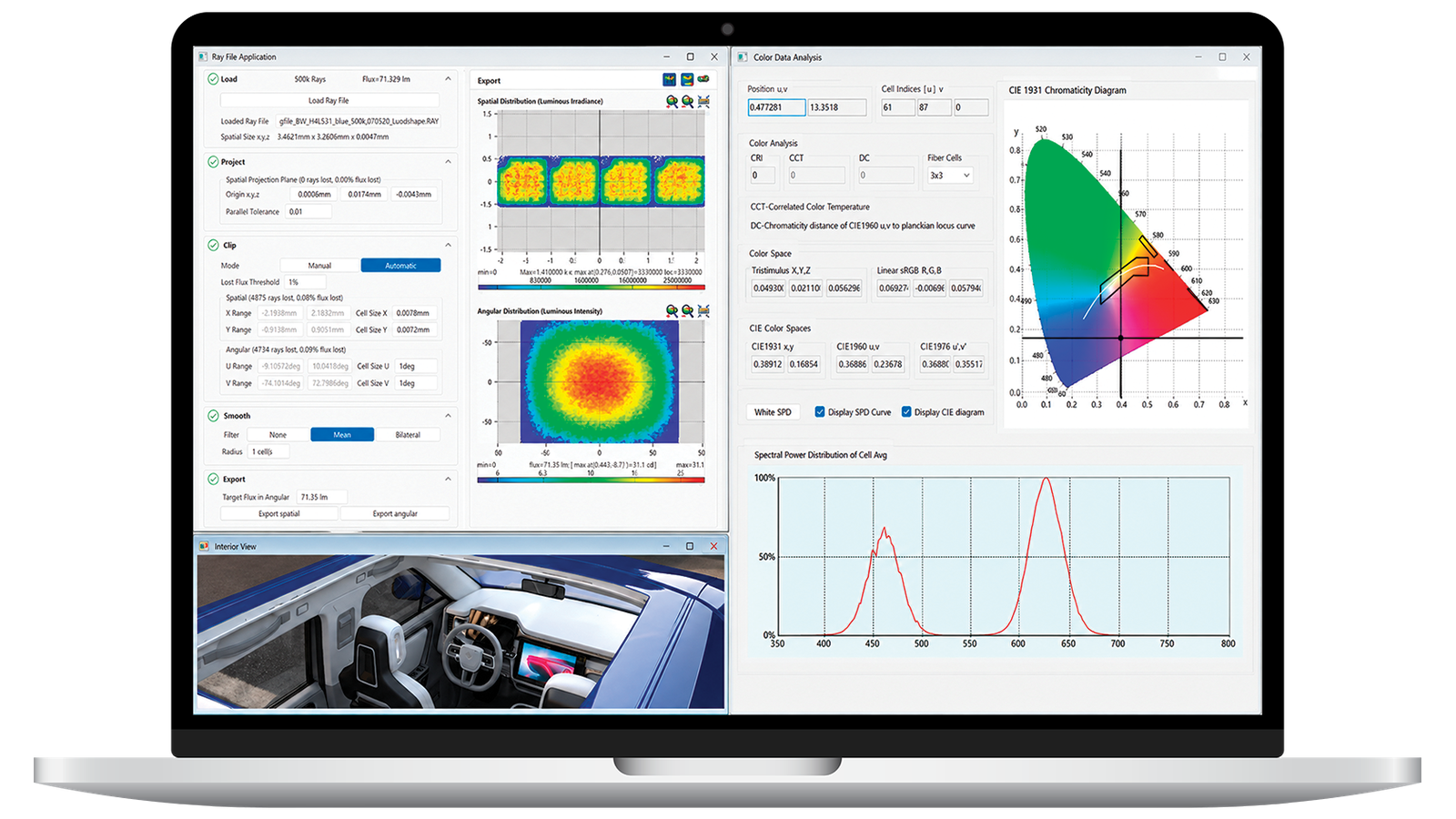
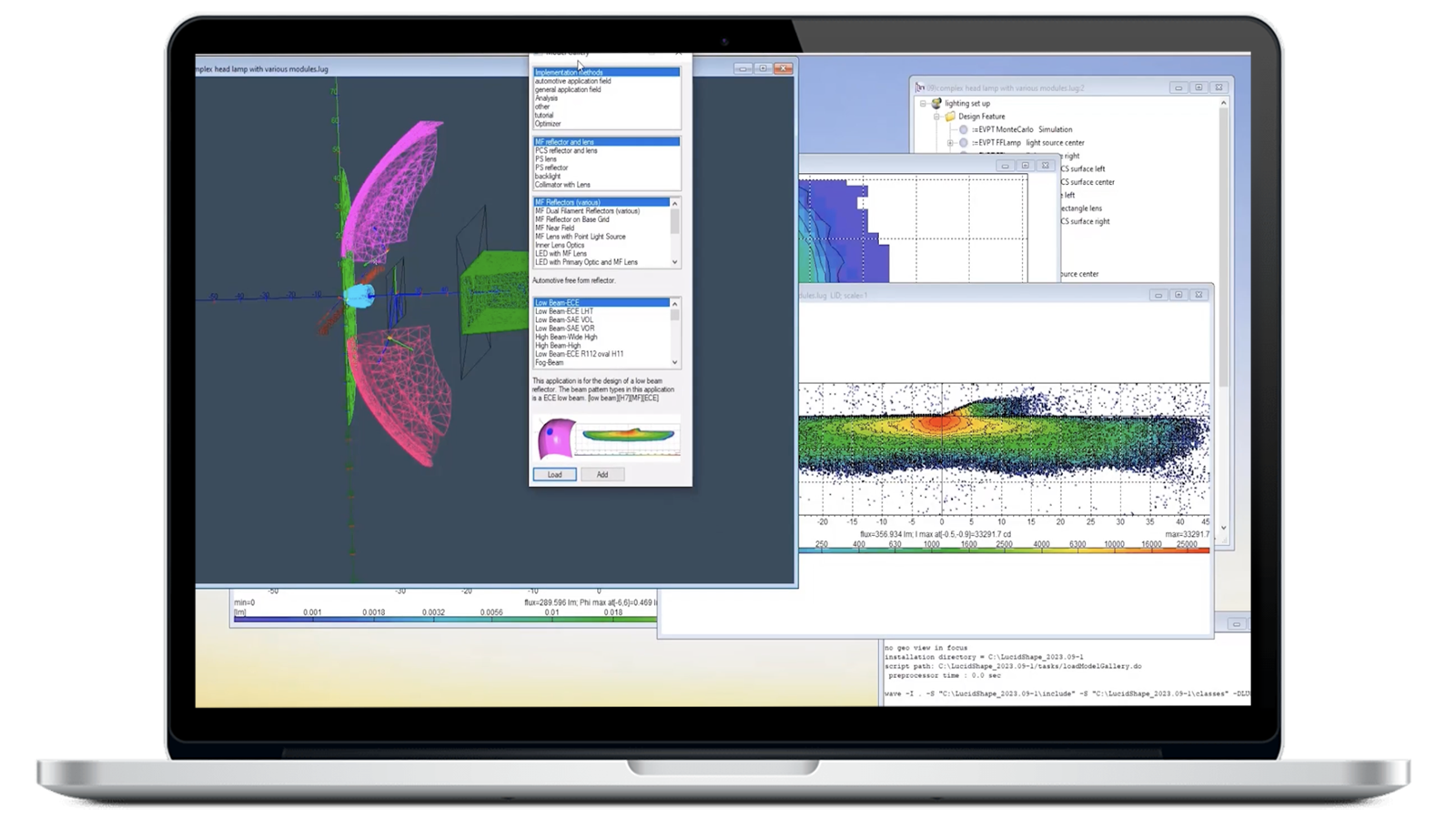
LucidShape
Design and optimize automotive lighting systems.
LucidShape allows you to create and analyze automotive lighting designs. It includes modules to streamline shape creation, simulation, and interactive analysis.
- Calculate and construct optical geometries with LucidShape’s proprietary algorithms.
- Accelerate illumination simulations with the GPUTrace module.
- Deliver fast, photorealistic images with the Visualize module.
- Simulate light sources, surfaces, materials, and sensors.
- Access the SmartStart Library for materials and media.

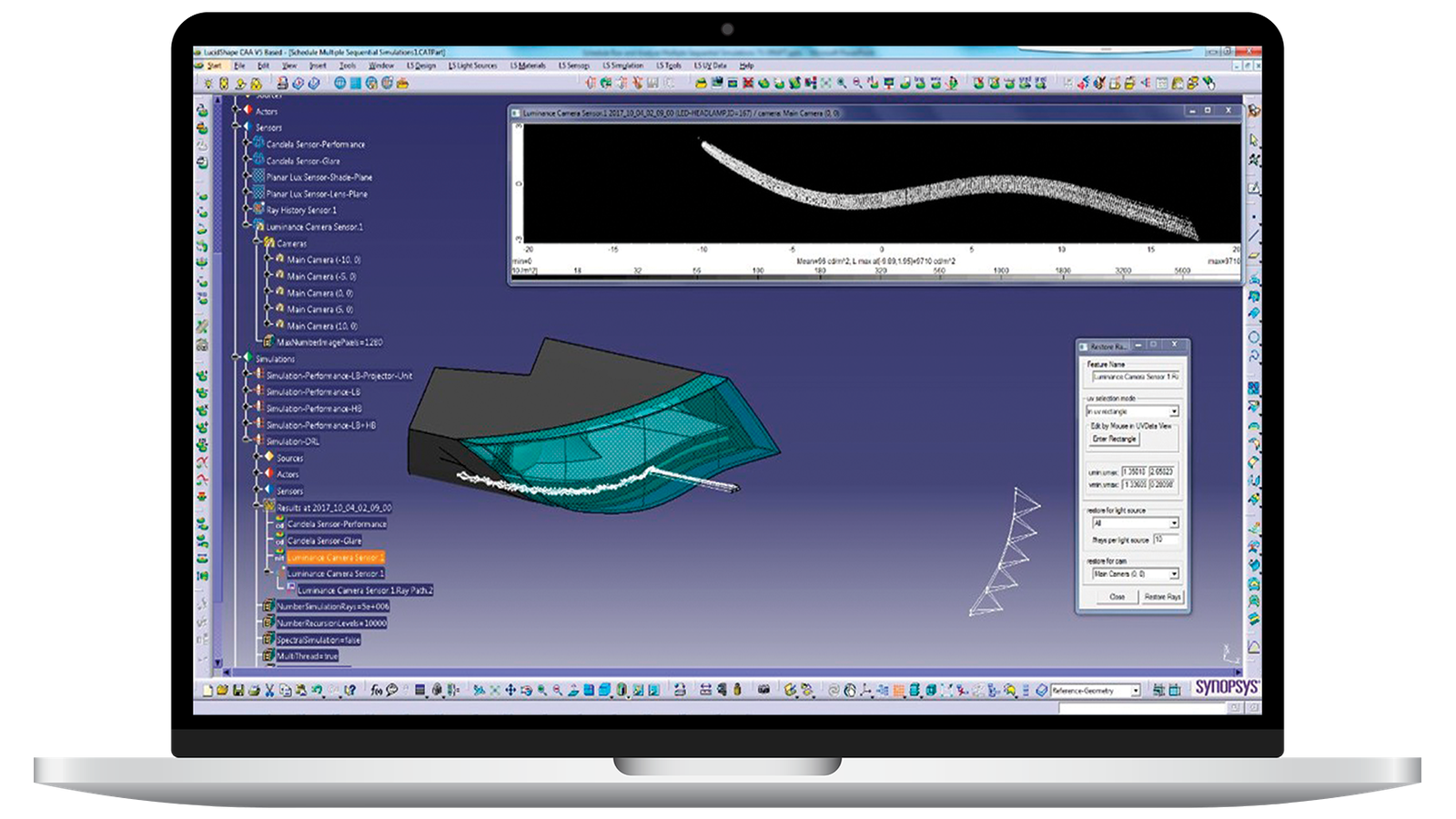
LucidShape CAA V5 Based
Develop automotive lighting directly inside the CATIA V5 environment.
Increase productivity with LucidShape CAA V5 Based, the industry’s only complete workflow solution available within the CATIA V5 environment to create and visualize automotive lighting designs.
- Experience efficient design navigation and management.
- Use physics-based visualization tools for photorealistic images and simulations.
- Gain automatic construction, analysis, and optimization of light guides and their extraction features.
- Access the SmartStart Library of materials including refractive index and absorption data.

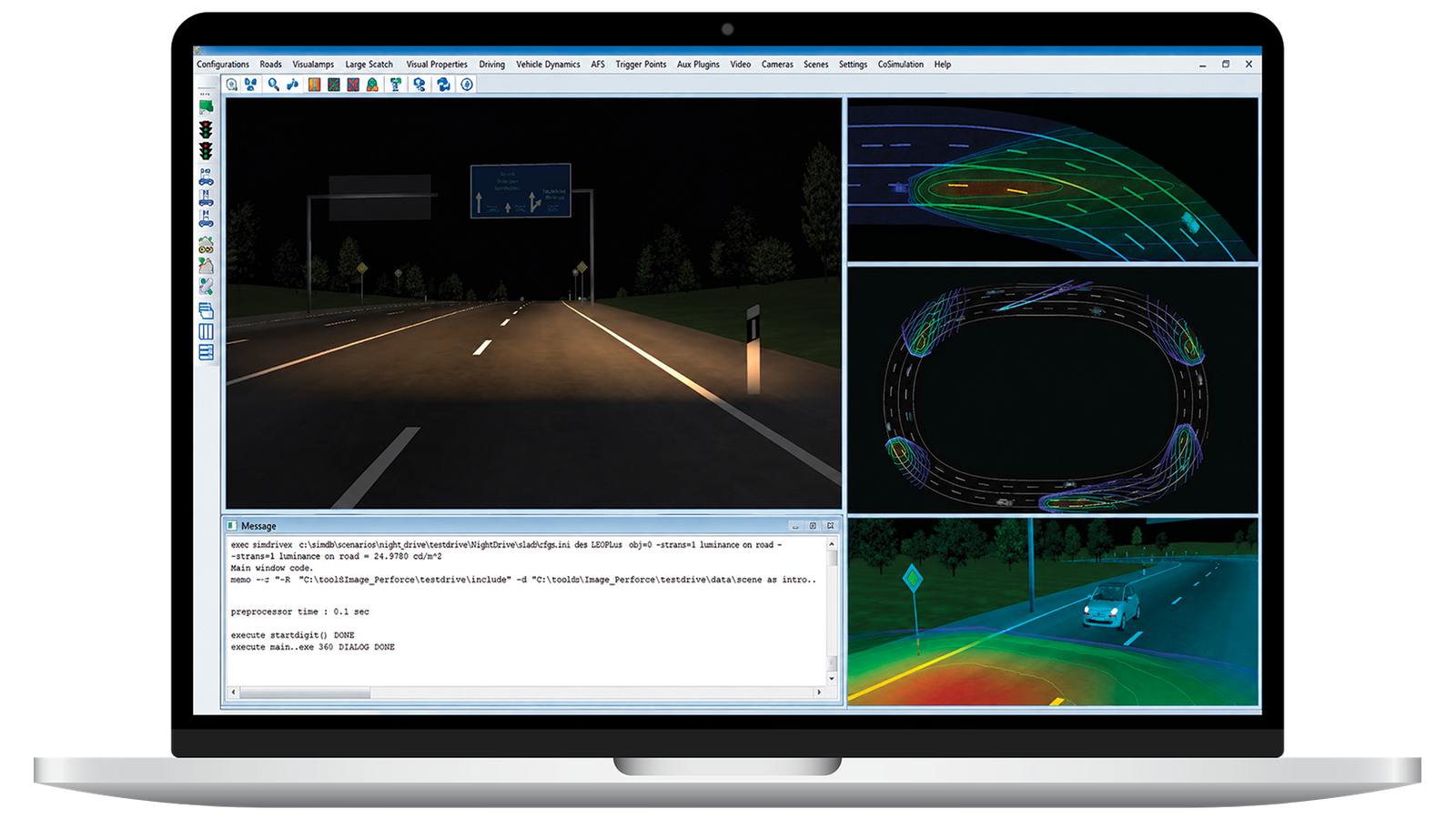
LucidDrive
Validate lighting performance through virtual night-driving simulation.
LucidDrive night-driving simulation explores the effectiveness of your automotive lighting designs before costly fabrication and testing phases. With this standalone simulation tool, conduct realistic beam pattern evaluations for vehicle headlamps to ensure optimal performance in real-world conditions.
- Switch between lamps, scenes, and viewing positions for immediate, interactive feedback.
- Use automatic driving mode to eliminate the need for steering, accelerating, or breaking.
- Simulate pixel light technology with the adaptive front lighting system feature.
 HeadlampsEvaluate beam patterns, visibility, glare, and adaptive lighting systems.
 Signal LightingDesign and optimize turn signals, rear lamps, and indicator systems.
 Interior LightingDevelop ambient lighting, illuminated surfaces, displays, and cabin experiences.
 Light GuidesCreate efficient and visually consistent lighting designs.
 Head-Up Displays (HUD)Analyze visibility and optical performance using integrated workflows.
 Adaptive Driving Beams (ADB)Evaluate advanced headlamp technologies before physical testing.
Resources to Get You Started
Iterate faster, validate against evolving regulations, and communicate lit appearance earlier in the design cycle with the latest features in LucidShape 2026.

Blogs
More Resources
技术资料
What’s New in LucidShape 2026

应用文章
Head-Up Display Simulation
应用文章
Designing a TIR High Beam
技术资料
GPUTrace
技术资料
LucidShape Visualize Module
技术资料
LucidShape CAA V5 Based
散页
LucidShape Modules
技术资料
LucidShape CAA V5 Based
散页
LucidShape CAA V5 Based 2026
Have Questions? We've Got Answers
Automotive lighting design software enables engineers to design, simulate, analyze, and validate vehicle lighting systems before physical prototypes are built. LucidShape products support exterior automotive lighting workflows, helping engineers evaluate optical performance, beam patterns, regulatory requirements, and visual appearance throughout development.
Engineers use LucidShape products to design and optimize exterior automotive lighting systems, including headlamps, signal lamps, daytime running lights (DRLs), tail lamps, and adaptive lighting technologies. Simulation-driven workflows help teams evaluate performance before testing and fabrication.
Engineers use optical simulation tools to create, analyze, and optimize headlamp designs, evaluate beam patterns, investigate optical efficiency, and assess regulatory performance before physical testing begins.
LucidShape products support the design and evaluation of advanced automotive lighting technologies, including adaptive driving beam systems and pixel lighting applications. Engineers can assess performance through simulation before vehicle testing.
Simulation enables engineers to evaluate beam patterns, illumination distribution, optical efficiency, and system behavior before physical prototypes are fabricated. This helps identify issues earlier in development and supports faster design iterations.
Night-driving simulation enables engineers to evaluate the effectiveness of automotive lighting systems in realistic virtual driving environments. LucidDrive allows teams to investigate visibility, beam performance, and driver experience before costly vehicle testing.
LucidShape is used to design, simulate, and optimize automotive lighting systems, while LucidDrive enables virtual night-driving evaluations that help engineers assess lighting performance in realistic driving scenarios.
LucidShape provides tools for automotive lighting design, simulation, and analysis. LucidShape CAA V5 Based delivers automotive lighting development workflows directly within the CATIA V5 environment, enabling design, visualization, analysis, and optimization in a unified CAD workflow.
By using simulation-driven design workflows, engineers can evaluate lighting performance, investigate design alternatives, and identify issues before building physical prototypes. This helps reduce development risk, shorten validation cycles, and improve engineering productivity.
Engineers use optical simulation, visualization, and virtual driving environments to assess headlamp performance, signal lighting behavior, illumination distribution, and overall system effectiveness before vehicle-level testing begins.