


Why Use RSoft DiffractMOD RCWA
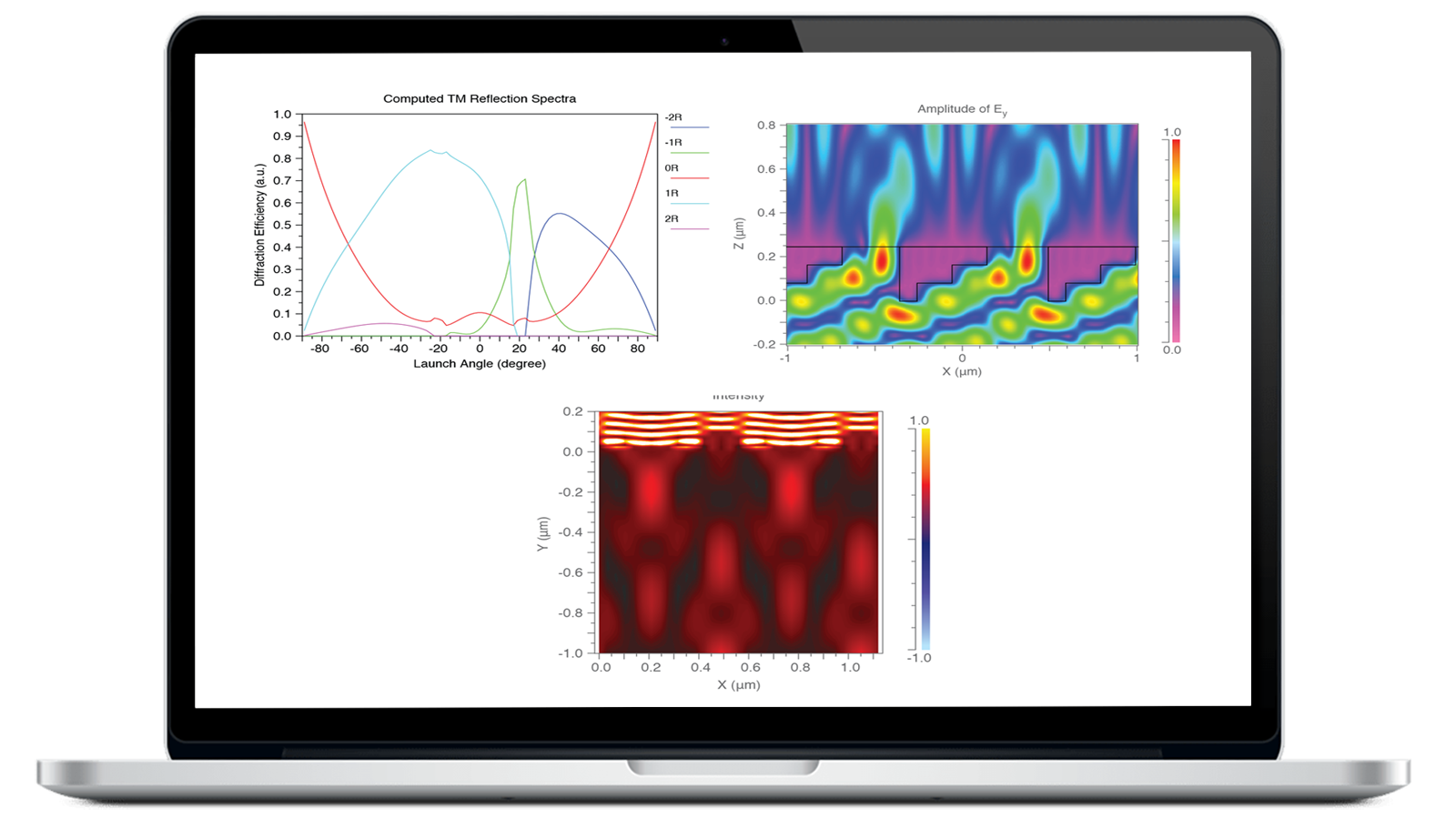
RSoft DiffractMOD uses rigorous coupled wave analysis (RCWA) to accurately model the interaction of light with periodic optical structures. Engineers can analyze diffraction efficiency, polarization behavior, resonance effects, and electromagnetic field distributions across gratings, metasurfaces, photonic crystals, and other nanophotonic devices before fabrication.
Use RSoft DiffractMOD RCWA for
- Calculating diffraction efficiency in periodic optical structures
- Designing transmission and reflection gratings
- Evaluating wavelength-, angle-, and polarization-dependent response
- Analyzing metasurfaces, metalenses, and subwavelength structures
- Modeling photonic crystals and waveguide gratings
- Studying dielectric, dispersive, metallic, and lossy periodic materials
- Generating near-field, far-field, reflection, transmission, and absorption results

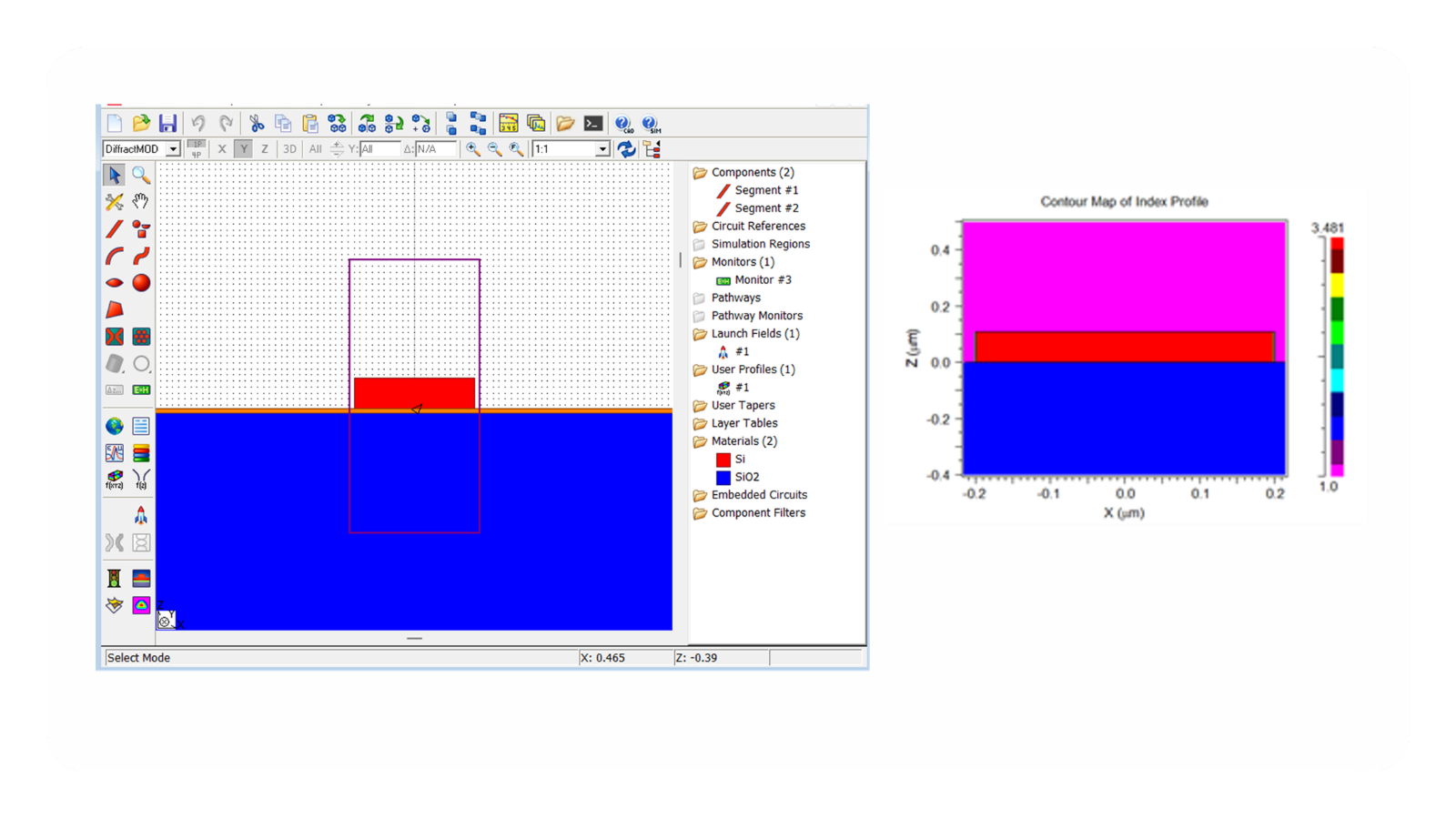
 Advanced RCWA AlgorithmsUse fast Fourier factorization and advanced numerical techniques to improve convergence and accuracy for complex periodic structures.
 Full-Vector Periodic Structure AnalysisModel arbitrary polarization states, conical incidence, and complex two-dimensional or three-dimensional periodic geometries.
 Real-World Material ModelsSimulate dielectric, dispersive, metallic, and lossy materials used in gratings, metasurfaces, photonic crystals, and nanophotonic devices.
 Comprehensive Optical OutputsCalculate diffraction efficiencies, reflected and transmitted power, absorption, electromagnetic fields, and spectral response.
Key Outcomes

Evaluate how geometry, materials, wavelength, angle, and polarization affect optical performance.

Compare diffraction orders and polarization-dependent behavior across operating conditions.

Account for dielectric, dispersive, metallic, and lossy behavior in periodic nanostructures.

Generate performance results across wavelength, incidence angle, and polarization without building physical prototypes for every variation.
RSoft MetaOptic Designer
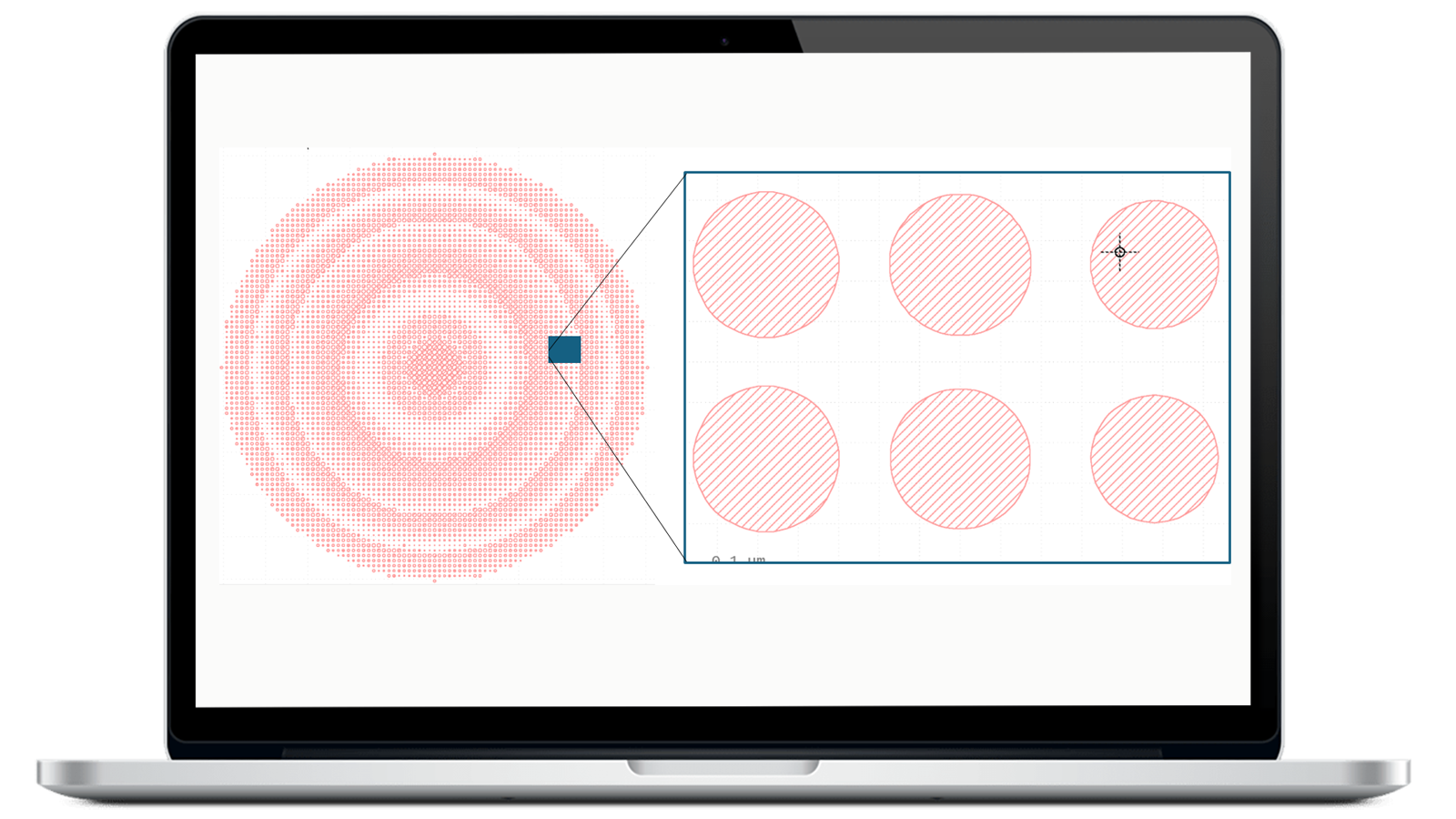
Use RSoft MetaOptic Designer to optimize metasurface and metalens design for next-generation compact imaging, sensing, and display applications.
RSoft FullWAVE FDTD
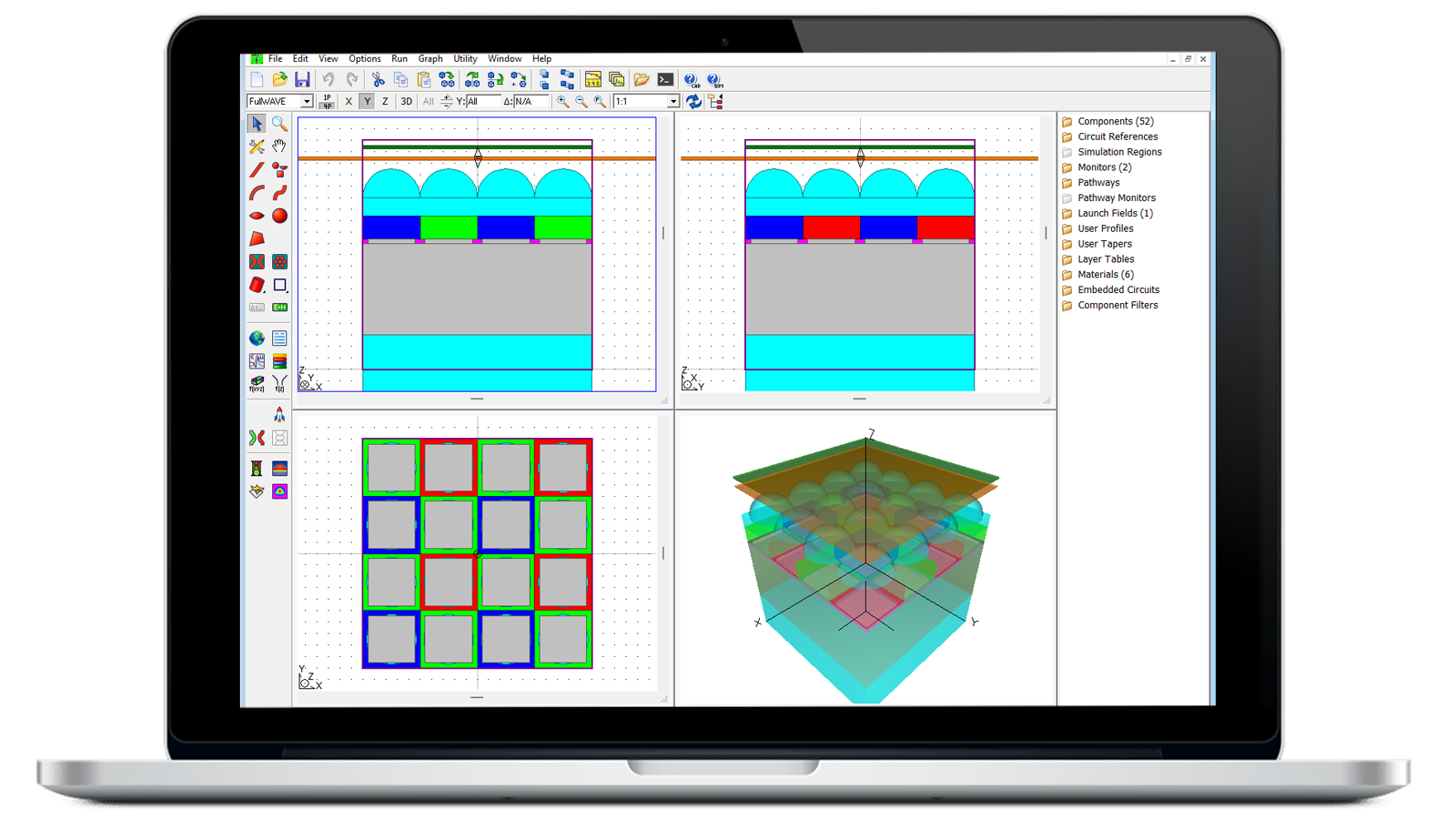
Use the RSoft FullWAVE FDTD simulation tool to study how light propagates in photonic structures, circuits, and nanophotonic devices.
RSoft MOST
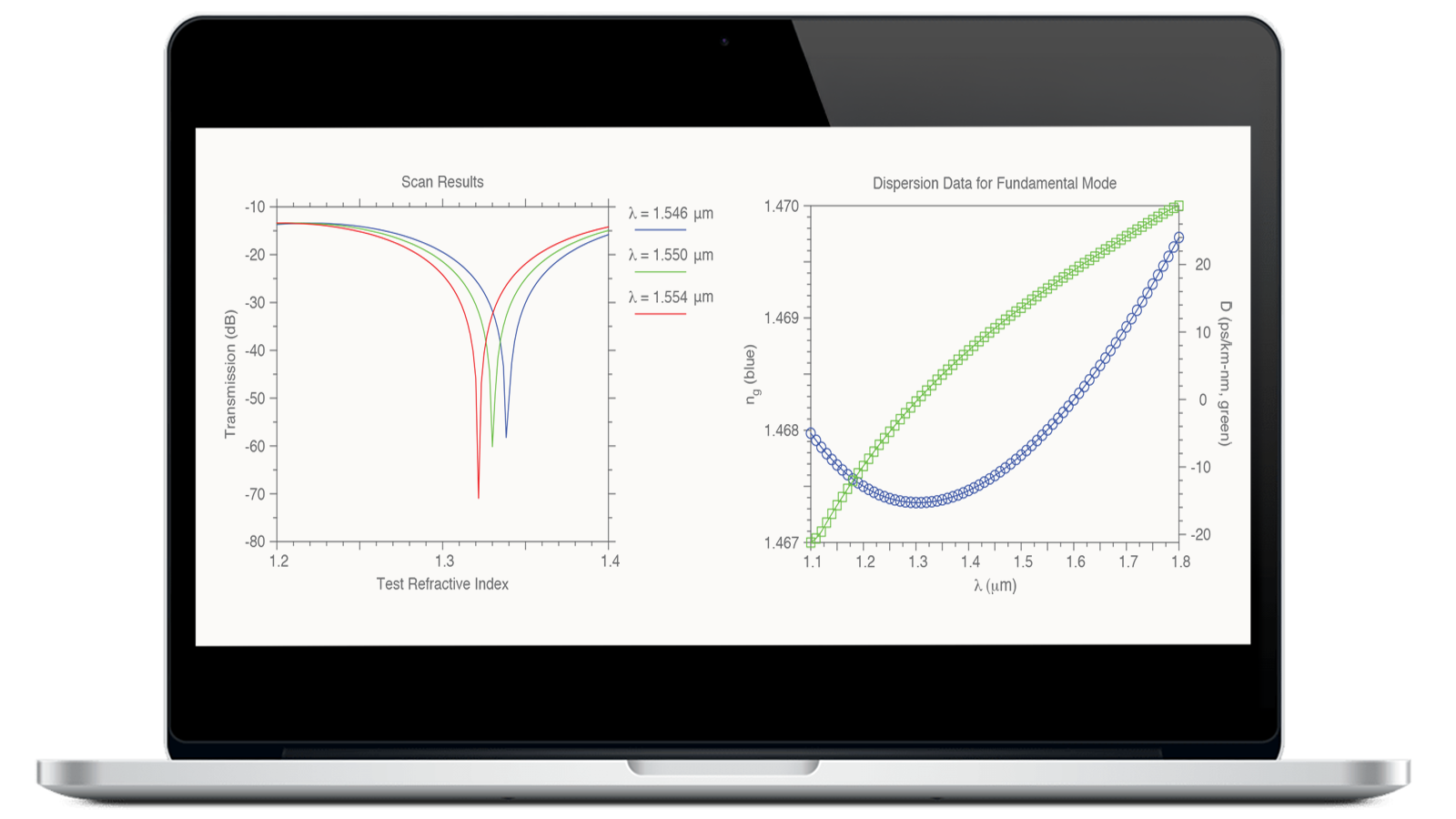
Use RSoft MOST or Multi-Variable Optimization and Scanning Tool to automate definition, calculation, and analysis of photonic device optimizations and scans.
RSoft CAD Environment
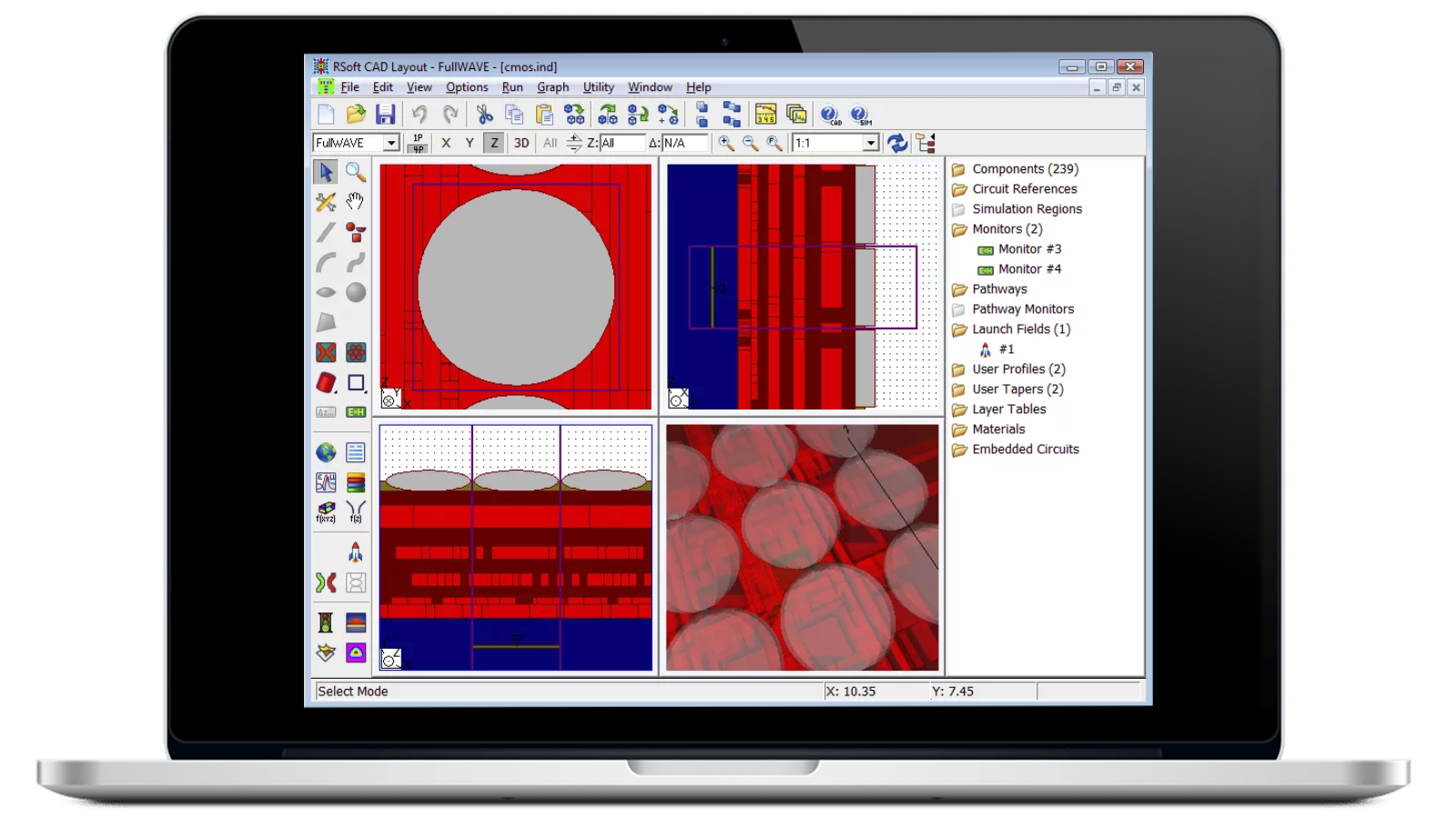
The RSoft CAD Environment is the core program of the RSoft photonic device tools. Design waveguide devices, optical circuits, and other photonic devices.
Resources to Get You Started
应用文章
Design a Chiral Hologram using Metasurface

应用文章
Subwavelength Grating Structure
应用文章
Design of Gratings for Depth Sensing
应用文章
Nanostructured Moth-Eye Anti-Reflective Coating
应用文章
Analyzing Goos-Hänchen Shift on Dielectric Gratings
应用文章
Design Reflective Polarizers for Display Backlight Recycling
白皮书
Choosing the Right Photonic Device Design Software
散页
What's New in RSoft Photonic Device Tools
应用文章
Dielectric THz Metalens Design
应用文章
Solar Cell Efficiency
应用文章
Multi-Junction Organic Solar Cells
Have Questions? We've Got Answers
RCWA is particularly effective for periodic optical structures such as diffraction gratings, metasurfaces, photonic crystals, and subwavelength devices. For these applications, RCWA can often provide faster simulations than general-purpose electromagnetic techniques.
Yes. DiffractMOD can be used to analyze the optical response of periodic nanostructures commonly used in metasurface and metalens designs.
DiffractMOD supports diffraction gratings, photonic crystals, waveguide gratings, metasurfaces, metalenses, holographic structures, and other periodic optical devices.
Yes. DiffractMOD supports arbitrary polarization states and allows engineers to evaluate polarization-dependent optical behavior.
Engineers can calculate diffraction efficiencies, reflected power, transmitted power, absorbed power, electromagnetic field distributions, near fields, and far fields.
Yes. DiffractMOD supports dielectric materials as well as dispersive and lossy metallic materials used in many nanophotonic and plasmonic devices.