


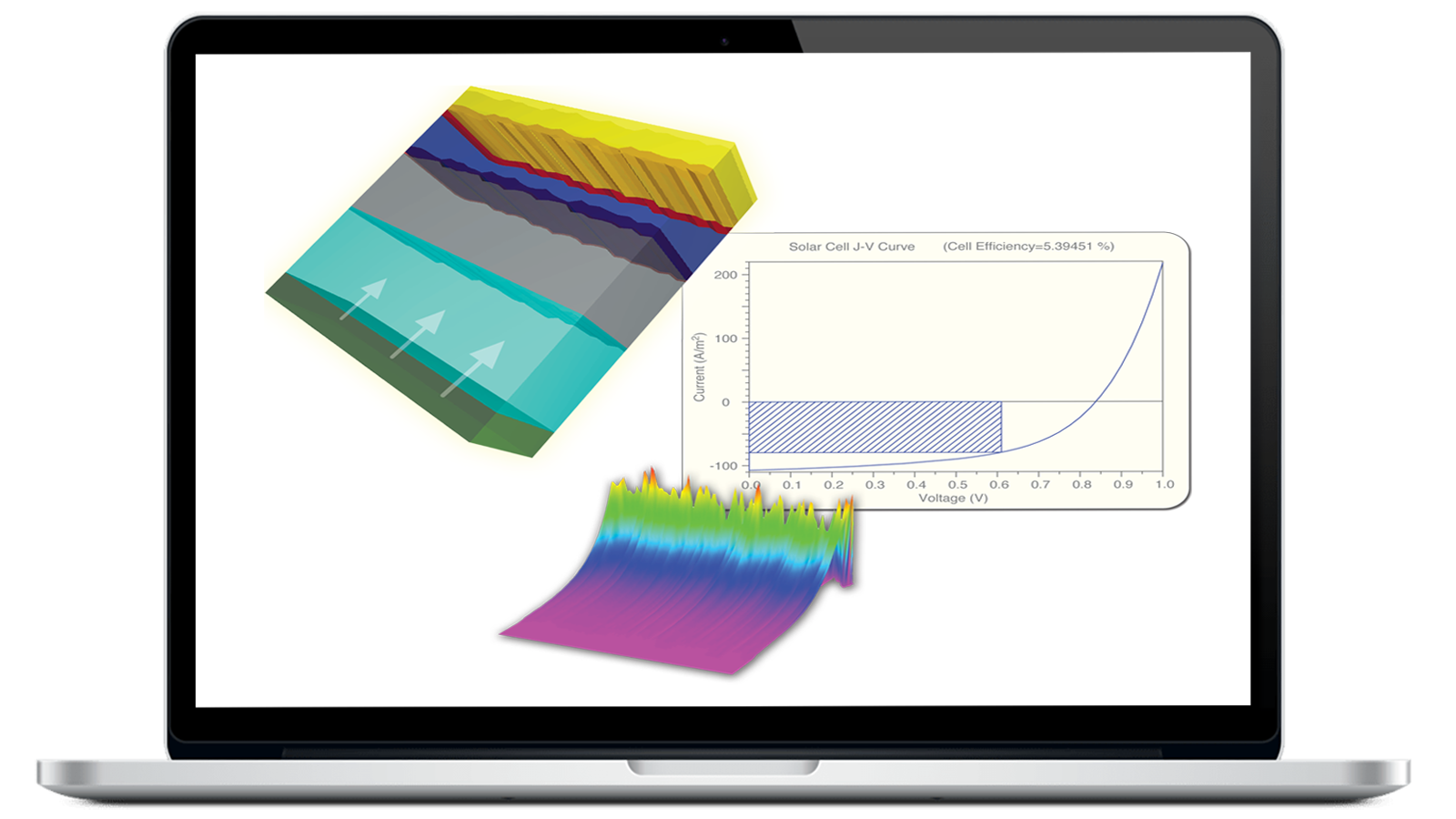
Why Use the RSoft Solar Cell Utility
Solar cell performance depends on the interaction of optical absorption, carrier generation, charge transport, and device losses. RSoft Solar Cell Utility enables engineers to model photovoltaic devices and evaluate key performance metrics including current density-voltage (J-V) characteristics, quantum efficiency spectra, and overall conversion efficiency. By combining optical and electronic analysis within a unified workflow, engineers can optimize device structures and better understand performance-limiting factors before fabrication.
Use RSoft Solar Cell Utility for
- Modeling optical absorption in photovoltaic structures
- Calculating current-density versus voltage characteristics
- Evaluating quantum-efficiency spectra
- Estimating overall solar-cell conversion efficiency
- Studying wavelength-dependent absorptive materials
- Assessing collection efficiency and illumination conditions
- Evaluating series and shunt resistance effects
- Comparing photovoltaic structures before fabrication

 Efficient Solar-Cell Performance AnalysisCombine optical simulation with simplified electronic modeling for initial photovoltaic design studies.
 Integrated Optical and Electronic SimulationUse the Solar Cell Utility LaserMOD option for more detailed optical and electronic analysis.
 Absorption and Material ModelingRepresent wavelength-dependent absorption using complex refractive-index data.
 Configurable Device ConditionsDefine illumination, shadowing, fill factor, collection efficiency, and parasitic-resistance parameters.
Key Outcomes

Evaluate how materials, geometry, and surface structures affect light absorption within the photovoltaic device.

Analyze J-V behavior and the effects of collection efficiency and parasitic resistance.

Use quantum-efficiency results to understand wavelength-dependent device performance.

Compare optical and electronic losses to determine where design improvements may have the greatest impact.
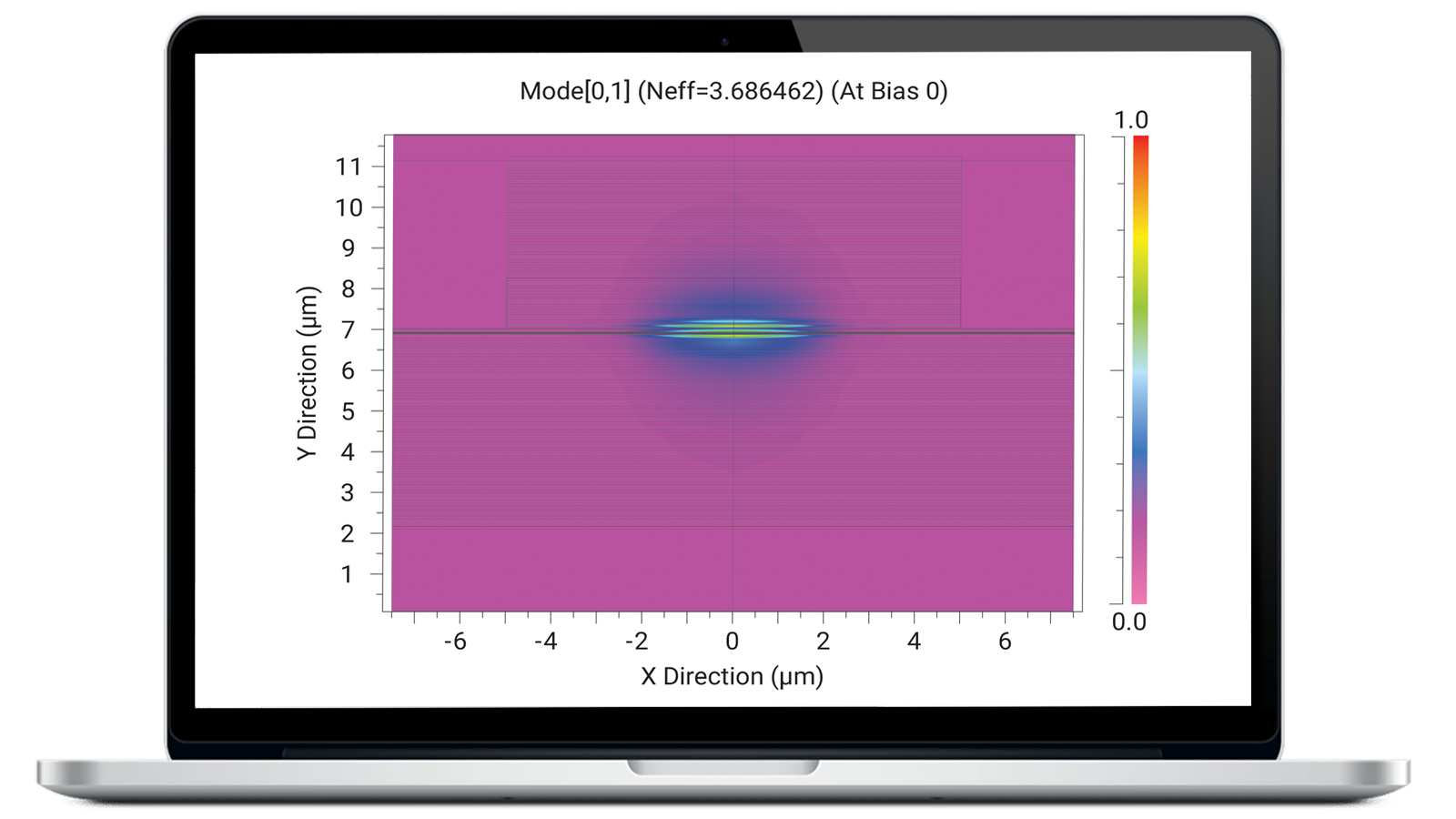
RSoft LaserMOD
Discover RSoft LaserMOD photonic device design tool for simulating optical, electronic, and thermal properties of semiconductor lasers and similar active devices.
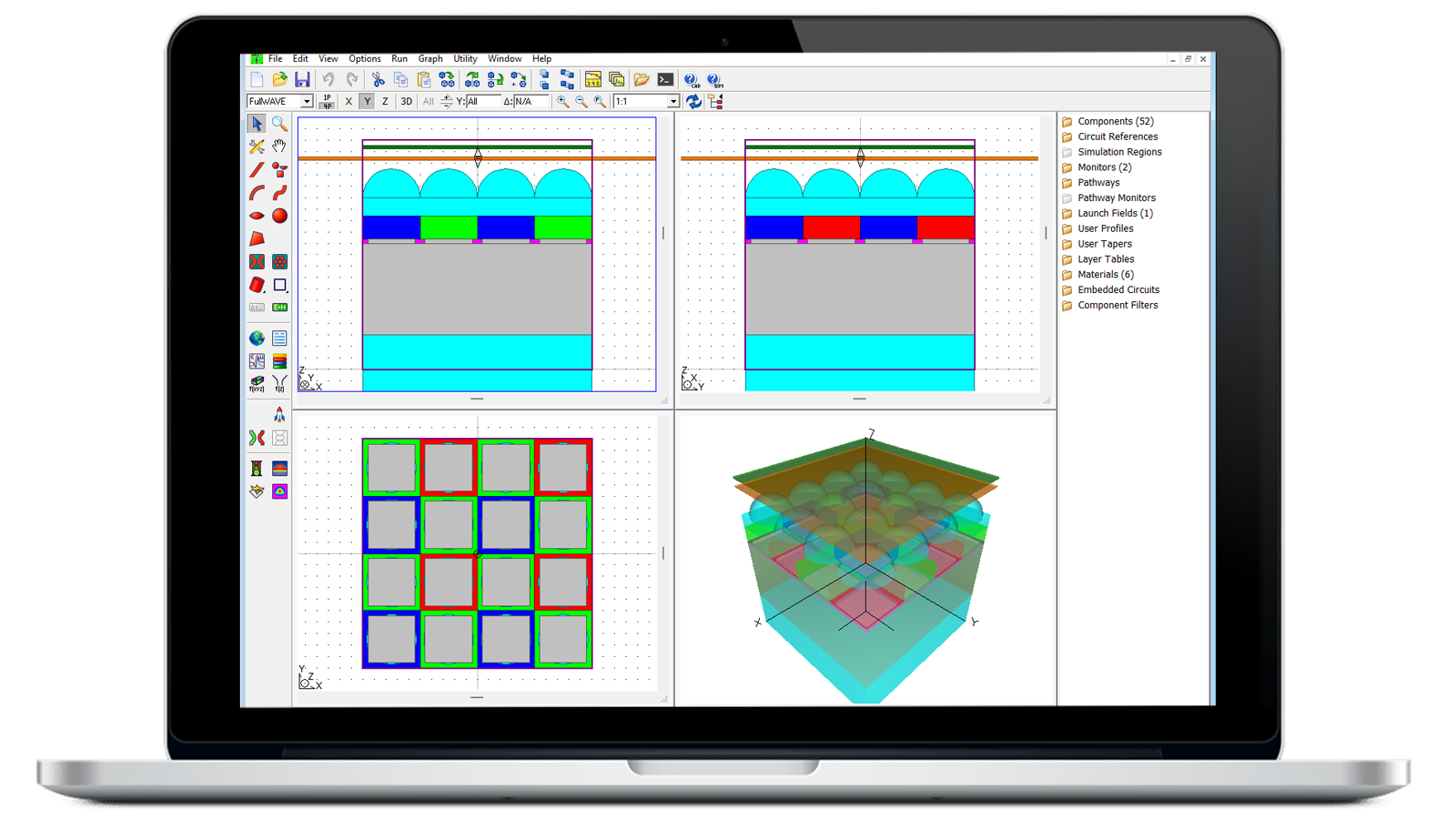
RSoft FullWAVE FDTD
Use the RSoft FullWAVE FDTD simulation tool to study how light propagates in photonic structures, circuits, and nanophotonic devices.
RSoft MOST
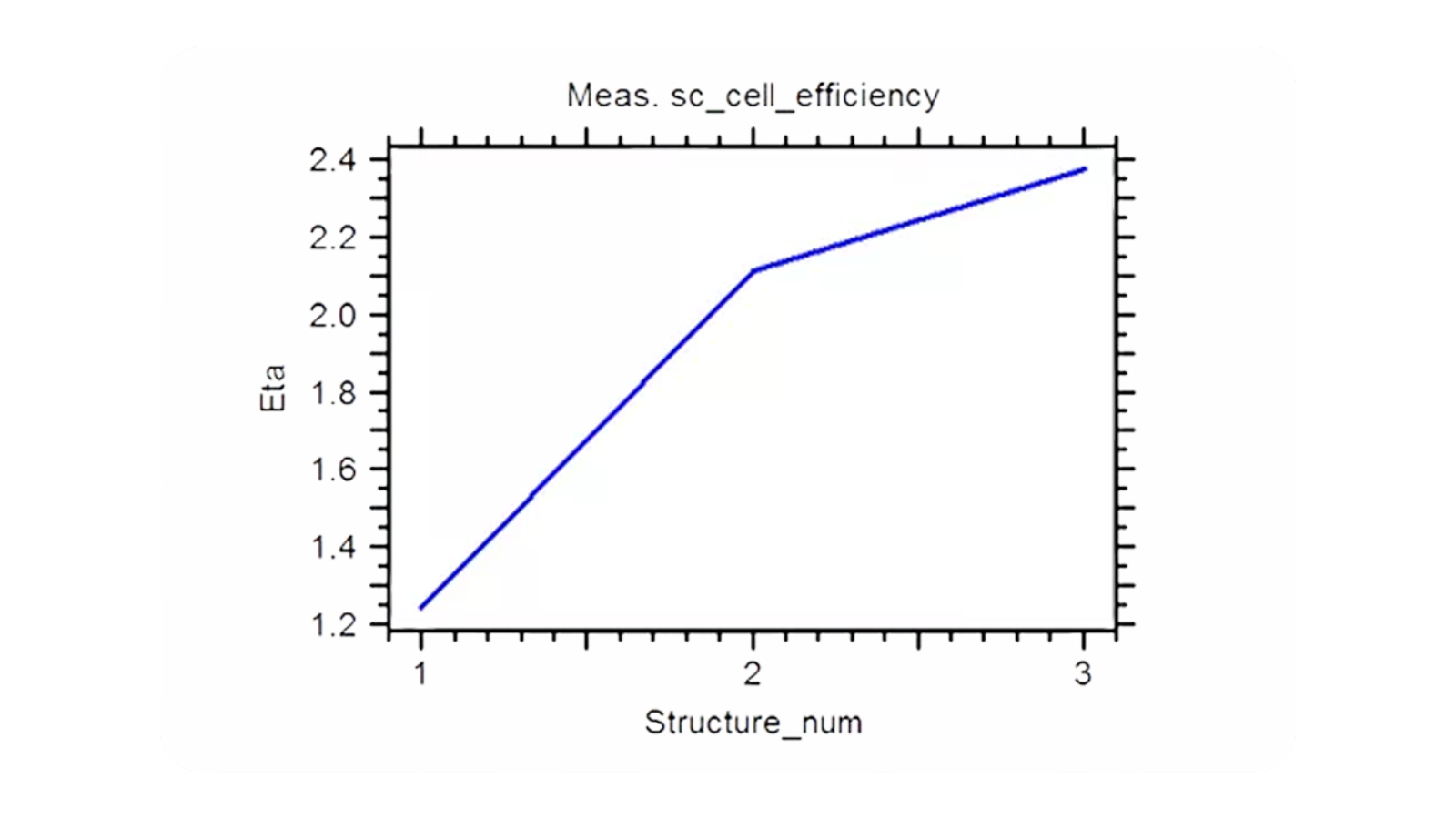
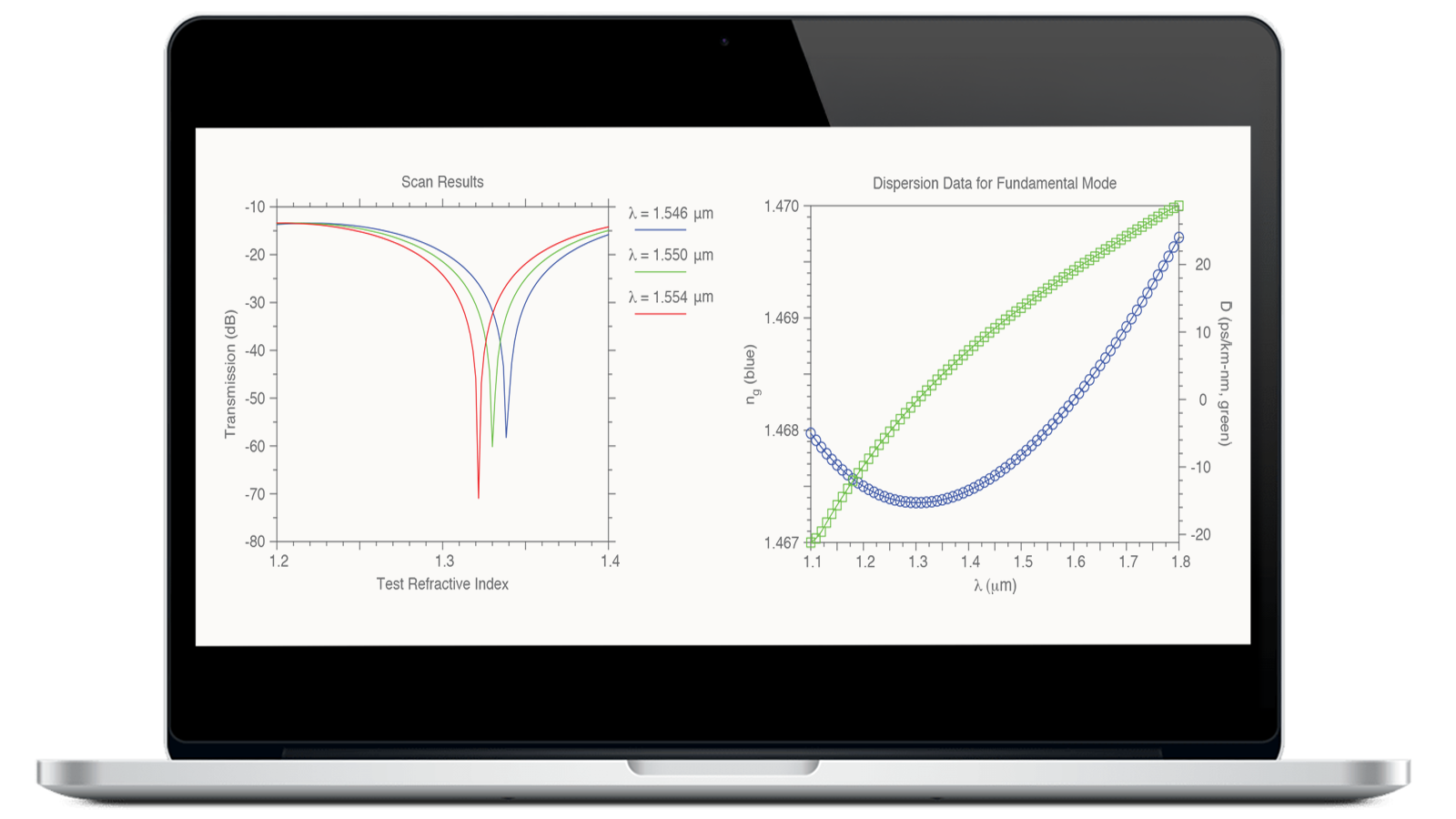
Use RSoft MOST or Multi-Variable Optimization and Scanning Tool to automate definition, calculation, and analysis of photonic device optimizations and scans.
RSoft CAD Environment
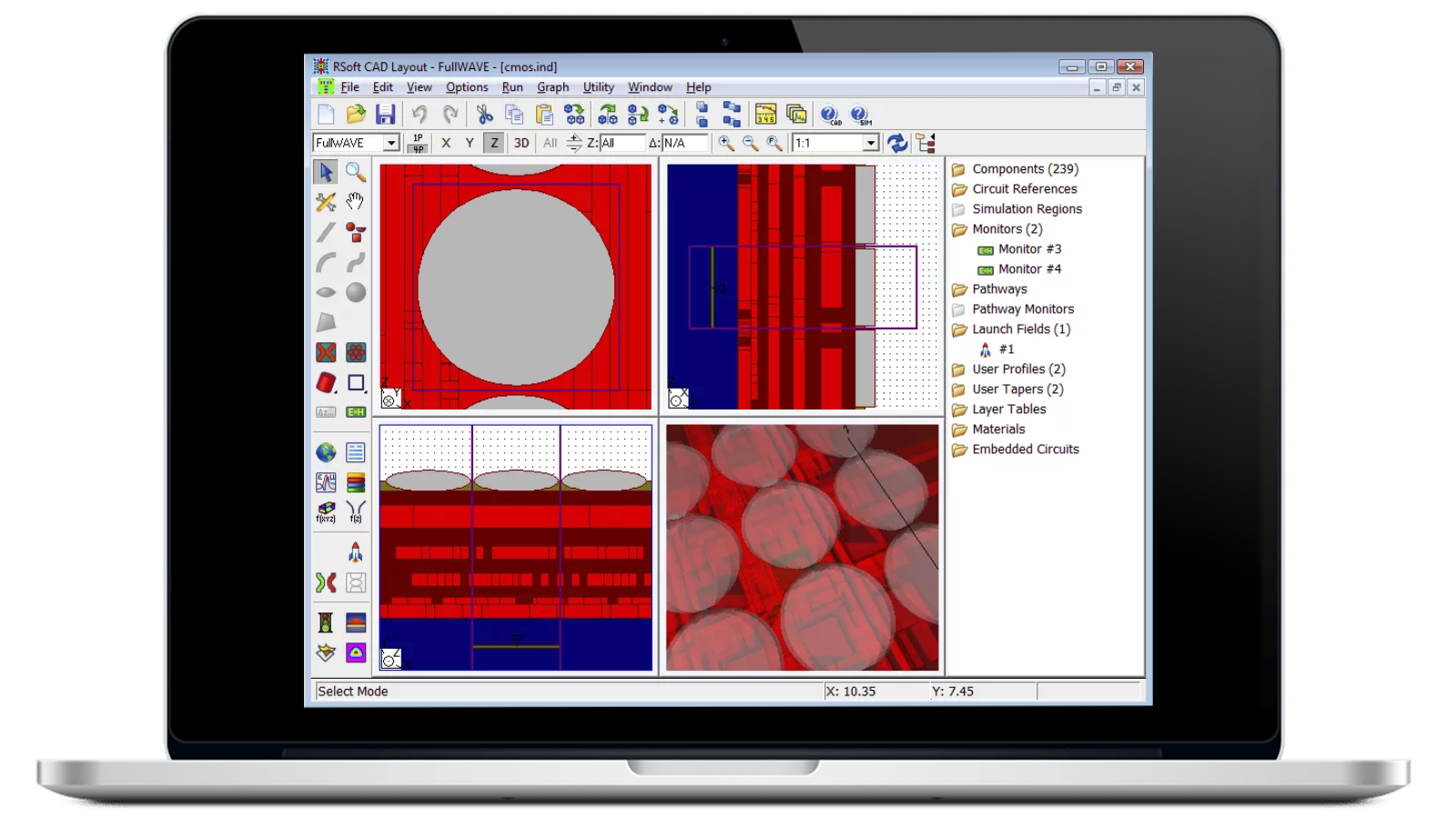
The RSoft CAD Environment is the core program of the RSoft photonic device tools. Design waveguide devices, optical circuits, and other photonic devices.
Resources to Get You Started
Explore how optical simulation can be used to improve solar cell efficiency through better management of light absorption and photovoltaic device design. Learn how simulation-driven optimization helps engineers evaluate performance and identify opportunities for increased energy conversion efficiency.


应用文章
Improving Solar Cell Efficiency with Surface Plasmons

应用文章
Multi-Junction Organic Solar Cells
Have Questions? We've Got Answers
You can apply RSoft Solar Cell Utility to:
- Solar cell design
- Solar cells with diffractive optical elements
- Solar cells with randomly textured material interfaces
- Investigating the electronic nature of solar cells
The basic version can be used with one of RSoft’s passive optical design tools such as RSoft DiffractMOD RCWA or RSoft FullWAVE FDTD (licensed separately) to conduct simple electronic modeling via a modified Ideal Diode equation.
The Solar Cell Utility LaserMOD option — which includes a limited license for LaserMOD — lets you conduct rigorous optical and electronic modeling and simulations.
Solar Cell Utility supports simulation and analysis of solar cell structures, enabling engineers to evaluate optical absorption, quantum efficiency, J-V characteristics, and overall conversion efficiency.
Solar Cell Utility combines optical and electronic analysis to evaluate key photovoltaic performance metrics including quantum efficiency, J-V characteristics, and overall device efficiency.
Yes. The software supports absorptive material modeling using frequency-dependent complex refractive index data.
Engineers can evaluate optical absorption, collection efficiency, parasitic resistance effects, and other design parameters to identify opportunities for improving overall solar cell efficiency.