



Why Optical Scattering Measurements Matter
Accurate scattering measurements provide insight into how real materials interact with light. By incorporating measured optical properties into simulations, engineers can:
- Improve stray-light predictions
- Increase simulation accuracy
- Evaluate coatings and surface finishes
- Reduce prototype iterations
- Improve image quality
- Optimize illumination performance
- Reduce development risk
 Improved Research and DevelopmentCompare the scattering behavior of various surface and material types to make the best choice for your project.
 Better Quality ControlUse scattering measurements to help diagnose defects in your manufacturing process, which originate from elements in the optical measurement system.
 Accurate SimulationsObtain real-world scattering data to include in optical measurement system digital twins to help manage performance, production, and costs.

Custom Measurement Services
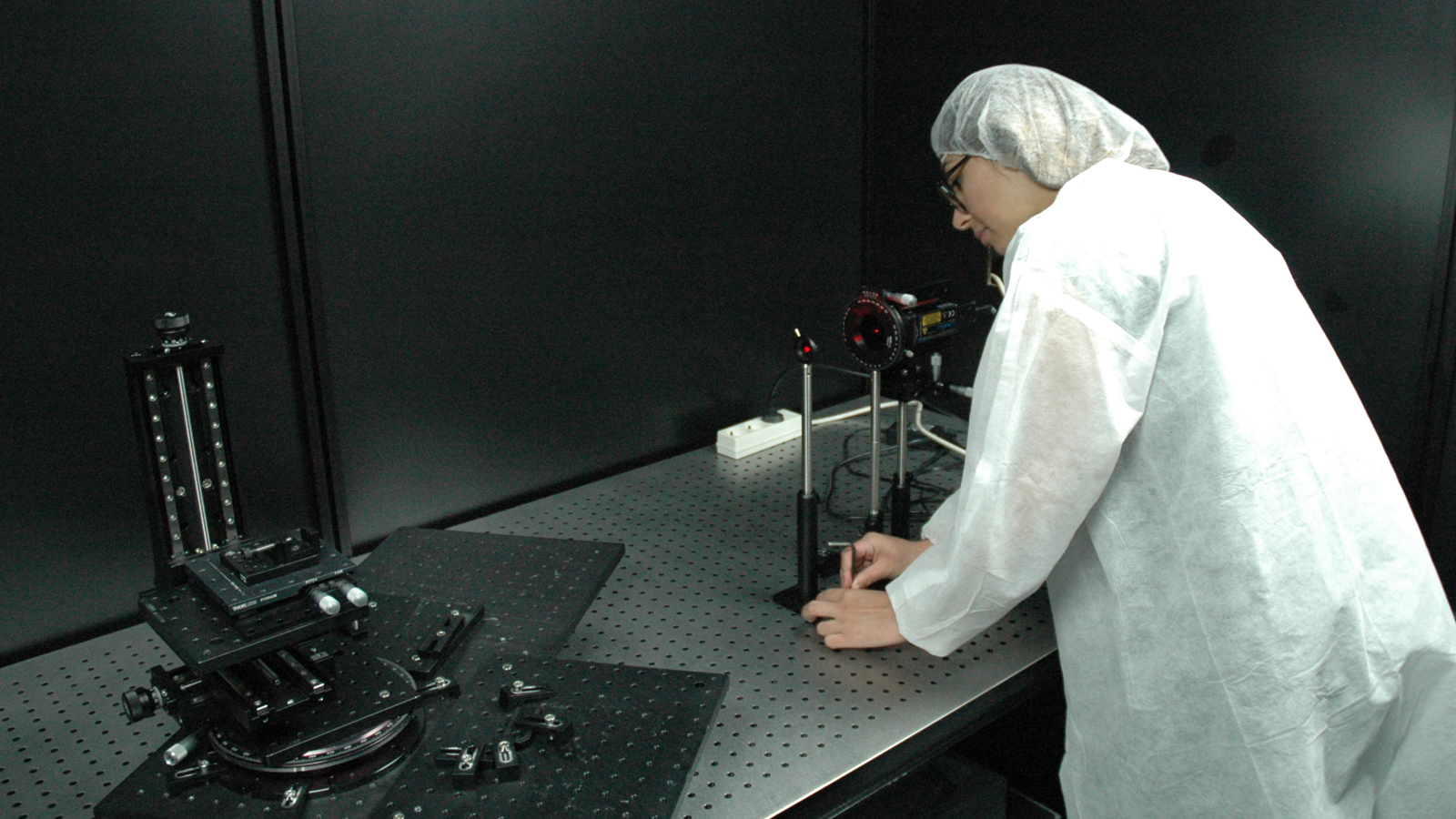
Our in-house laboratory is light- and temperature-controlled to provide an optimal measurement environment. Get the following SmartStart Measurement Services from our optical experts:
- 2D and 3D bidirectional scattering distribution function or BSDF (front and back) measurements
- High-resolution BSDF measurements
- Spectral BSDF measurements
- Total internal reflectivity (TIR) measurements
- Total integrated scatter (TIS) measurements
- Ultraviolet (UV), visible, and infrared radiation (IR) wavelengths measurements (from 280 nm to 10.6 microns)
Explore Keysight Optical Scattering Measurement Equipment
We offer a comprehensive suite of hardware solutions designed to deliver precise light scattering data for materials and media in optical systems. These tools enable you to measure your own optical samples and seamlessly import custom data into Keysight's advanced optical design software.
- Mini-Diff V2
- REFLET 180S
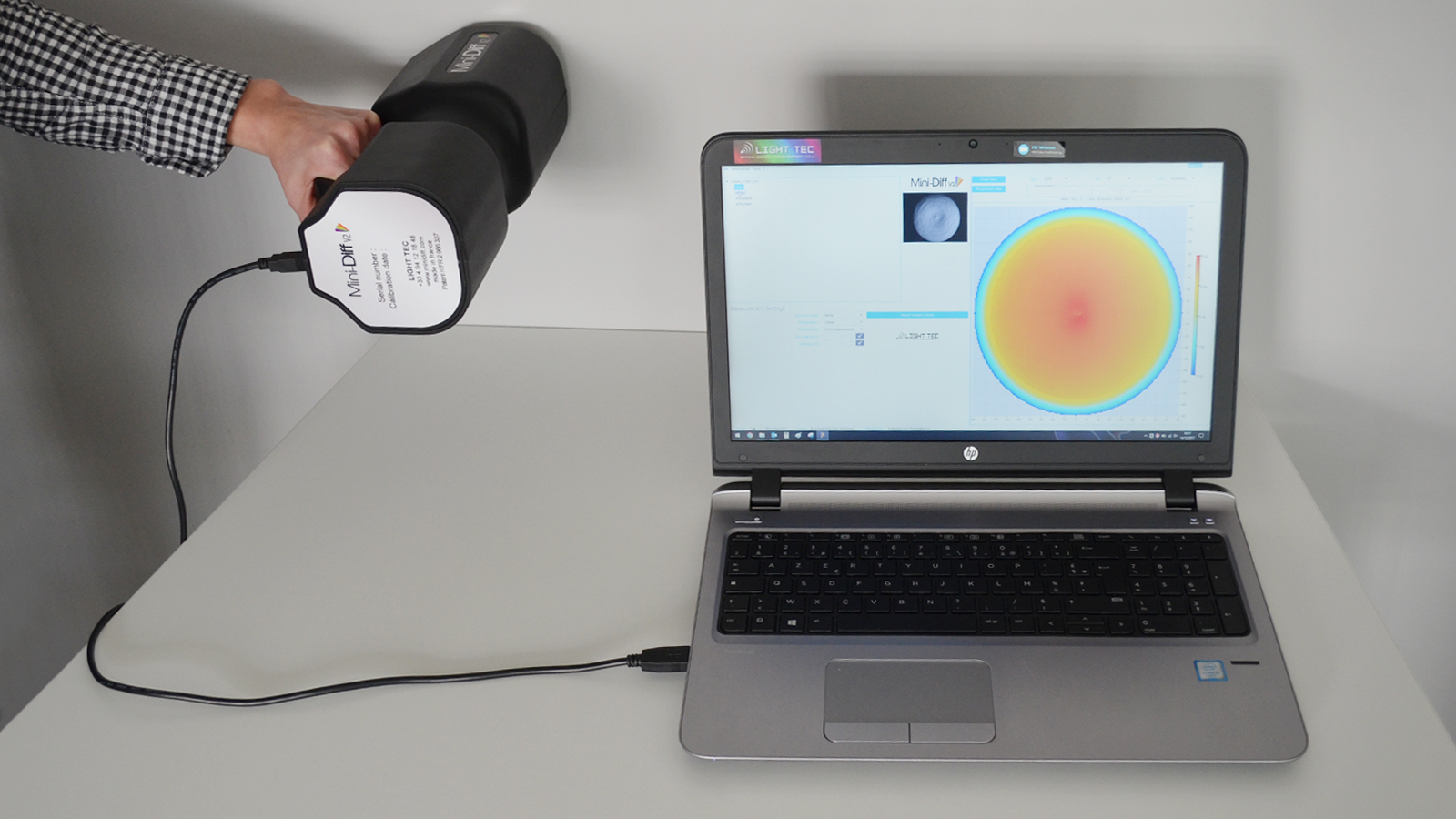
Mini-Diff V2

REFLET 180S
Perform spot inspection or quick analysis with the easy-to-use REFLET 180S optical bench. REFLET 180S is especially suited for backward and forward light scatter characterization for all types of materials and objects. This light scattering instrument allows you to measure the light distribution contained in the radiation lobe of these materials in photometric and colorimetric terms. The system is used for BRDF and BTDF measurement, which represents the way any surface scatters incoming light in 3D space.
 Automotive LightingEvaluate materials, coatings, and surfaces used in headlamps, signal lamps, interior lighting, and sensor systems.
 AR/VR and Imaging SystemsCharacterize scattering effects that impact image quality, contrast, and visual performance.
 Aerospace and DefenseSupport the analysis of optical coatings, sensors, and high-performance imaging systems.
 Consumer ElectronicsOptimize displays, camera modules, lenses, and illumination components.
 Medical DevicesImprove optical performance in diagnostic and imaging equipment. These align with your broader ICP and industry strategy.
Turn Measurements into Better Simulations
Accurate optical simulations depend on accurate input data. Keysight optical scattering measurements help engineers characterize real materials and surfaces, enabling more realistic models for imaging, illumination, and stray-light analysis. The result is greater confidence in design decisions before hardware is built.


Scattering Measurement Resources
Modern automotive and satellite systems rely on precise optical performance, where stray light and reflection can compromise reliability. Bidirectional Scattering Distribution Function (BSDF) measurements provide the key to understanding and controlling how surfaces interact with light.


Blogs
More Resources
应用文章
High-Accuracy BRDF and BSDF Characterization of Ultra-Black Coatings

应用文章
Scattering Measurements Guide
技术资料
SmartStart Library
Brochures
Mini Diff 3D (Hemispheric) Scatterometer BRDF/BTDF
Have Questions? We've Got Answers
We perform SmartStart Measurement Services from our in-house laboratory. The laboratory has strict temperature and humidity regulation, helping ensure the accuracy of your custom measurements. Specific services include 2D and 3D BSDF, high-resolution BSDF, TIR measurements, TIS measurements, and more.
The SmartStart Libraries store hundreds of optical measurements. We continuously augment our SmartStart Libraries to expand your access to precision light scattering data for faster, physics-based system modeling. LightTools and LucidShape offer SmartStart Libraries containing materials and media commonly used in the design of optical systems. This helps you save time and reduce development costs.
Scattering measurements help engineers understand how real surfaces and materials interact with light, improving simulation accuracy and optical system performance.
Measurements can be performed on optical coatings, lenses, diffusers, films, plastics, painted surfaces, mechanical components, and other materials used in optical systems.
BSDF is a general term describing how light is scattered. BRDF characterizes reflected light, while BTDF characterizes transmitted light.
Yes. Measured scattering data can be incorporated into optical simulation workflows to improve model accuracy and increase confidence in design decisions.
They help identify sources of unwanted reflections, flare, glare, haze, and stray light that can degrade optical performance.
Yes. Accurate scattering data is often used to create more realistic stray-light and ghost-image simulations.
Keysight supports measurements across ultraviolet, visible, and infrared wavelength ranges.
They can provide value during material evaluation, prototype development, design validation, manufacturing qualification, and failure analysis.
Yes. Our team can help transform measurement data into models suitable for engineering analysis and optical simulations.
Applications include automotive, aerospace and defense, AR/VR, consumer electronics, medical devices, industrial optics, and photonics.
Optical Scattering Terminology
Light scattering is the way light behaves when it interacts with a medium that contains particles or a boundary between different mediums that contains defects or structures. It is different than the effects of refraction, where light undergoes a change in index of refraction as it passes from one medium to another, or reflection, where light reflects back into the same medium, both of which are governed by Snell’s law.
BSDF stands for Bidirectional Scattering Distribution Function, which is a mathematical function that characterizes how light is scattered from a surface.
In an optical design, total internal reflection (TIR) bidirectional scattering distribution function (BSDF), also called internal BSDF, corresponds to a bidirectional scattering distribution function measured at an interface that separates two different mediums. The aim is to measure surface scattering from the inside of a material. It’s especially relevant for materials with a rough surface where surface scattering and total internal reflection phenomena occur together on two separate mediums. See the image for an example of a light guide with VDI texture modeled in LightTools.
Total integrated scattering (TIS) describes how much light is deviated (or scattered) from the incident light direction by diffuse reflection and transmission from a surface or optical element. It is equal to the ratio of diffuse reflected and transmitted optical power to the incident optical power when light is incident upon a surface.
Haze is one of multiple quantities that can characterize a diffusive material. The other quantities are reflectance, transmittance, absorption, total integrated scattering (TIS) measurements, and bidirectional scattering distribution function (BSDF).
Volume scattering is a phenomenon that occurs in an optical medium (e.g., glass or plastic), where the presence of small particles within the volume of the material causes light to scatter. Particulate flaws in the medium may occur due to small bubbles, inclusions, or contamination.
Reflectance describes how much light is reflected from a surface or optical element. It is equal to the ratio of reflected power and incident power when light is shot onto a surface.
Transmittance describes how much light is transmitted from a surface or optical element. It is equal to the ratio of transmitted power and incident power when light is shot onto a surface.
Spectral measurement is the process of analyzing the distribution of light intensity as a function of the incident wavelength. In the context of optical scattering, it involves measuring how light of different wavelengths is scattered by a material or surface.