您希望搜索哪方面的内容?
RSoft Multi-Physics Utility
Integrated simulation software for modulators, switches, waveguides, and fibers

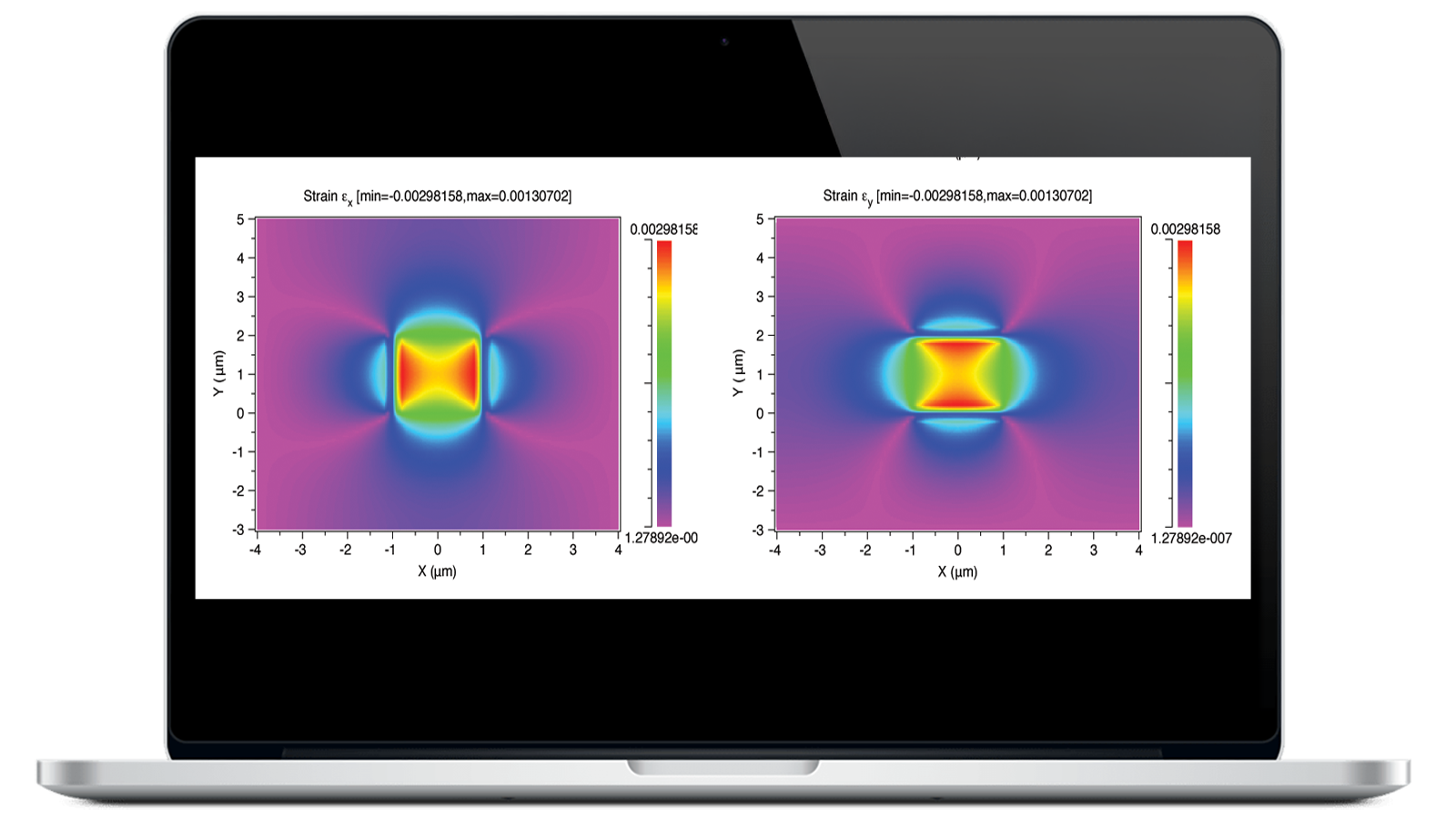
Easy-to-Use Options to Compute Index Perturbation
RSoft Multi-Physics Utility provides a convenient interface to perform multi-physics optical analysis and determine the physical effects on photonic devices. Optical engineers can simulate perturbations of the refractive index profile to see how they interact with each other. Advanced physical processes in the material involving electro-, thermo-, and stress-optic effects, as well as carrier-induced effects can cause these perturbations. Designed for use with any RSoft passive device simulation tool, Multi-Physics Utility also includes the RSoft Material Library to find the material parameters needed to describe these effects.
- Analyze electro-optic and thermo-optic effects using the basic version of the Multi-Physics Utility, which is included with all RSoft passive device tools.
- Employ the Multi-Physics Utility – Stress or Multi-Physics Utility – Carrier options to analyze stress-optic or carrier-induced effects, respectively — each licensed separately.
Key Features of RSoft Multi-Physics Utility


Full RSoft CAD integration
Expand the power of Keysight’s RSoft passive device simulation tools with full integration within the RSoft CAD environment.


RSoft material library
Select the parameters to define a material’s behavior and properties from RSoft’s extensive material library.


Licensing flexibility
Select from multiple licensing options depending on whether you need to analyze electro-optic, thermo-optic, stress, or carrier effects.


Multi-equation capabilities
Multi-Physics Utility computes index perturbations by solving Poisson’s, thermal, and stress-strain equations, and by using LaserMOD to model carrier-based effects.


Convenient automation
Automate parametric studies and design optimization with RSoft MOST integration and interoperability.
Need Support for RSoft Multi-Physics Utility?
Explore Blogs









RSoft Multi-Physics Utility – FAQ
Fully integrated into the RSoft CAD Environment, the RSoft Multi-Physics Utility works with any RSoft passive device simulation tool to accurately simulate perturbations of the refractive index profile to see how they interact with one another. Use it to analyze the effects of electrodes, heaters, stress, and carriers on the refractive index profile during photonic device simulation. Multi-Physics Utility uses LaserMOD to model carrier-based effects and MOST to automate parametric studies and design optimization.
Depending on the version licensed, use Multi-Physics Utility for:
- Electro-absorptive/electro-refractive modulators
- Thermo-optic switches
- Electrically biased modulators
- Birefringence in waveguides and fibers
- Stress effects caused by cooling during device fabrication
The basic version of the Multi-Physics Utility, which is included with all RSoft passive device tools, analyzes electro-optic and thermo-optic effects. Meanwhile, the Multi-Physics Utility – Stress or Multi-Physics Utility – Carrier options analyze stress-optic or carrier-induced effects, respectively; each are licensed separately.